Subscribe to our E-Letter!
Subscribe to our e-mail and stay up-to-date with news and resources from street vendors around the world.
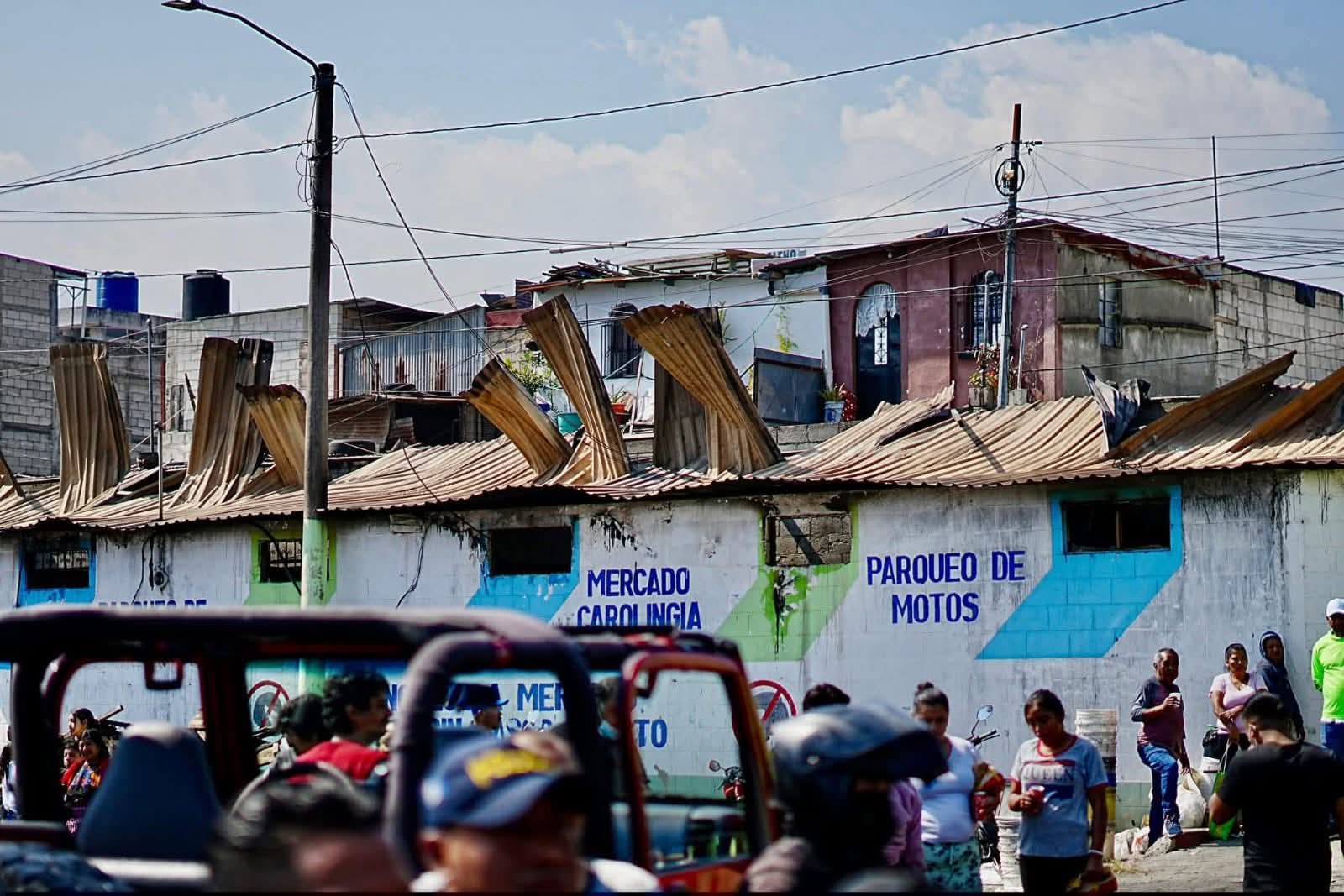
It has been about a month since the end-of-year celebrations ended, but market vendors celebrated in a different way. While most people were putting away their Christmas decorations and preparing for the expenses of the new year, hundreds of merchants in the municipality of Mixco, Guatemala, at the Corolingia Market, and in neighboring cities in Honduras, at the Medina Market, experienced a real nightmare. Instead of colorful lights, they saw flames; instead of New Year’s hugs, there were tears and cries of despair as they watched their stalls turn to ashes.
To understand the magnitude of this tragedy, we must first understand what a market means to our people. The market is not just a bunch of stalls with merchandise; it is the heart of the community. It is the place where the woman who sells tortillas knows the names of all her customers, where the butcher gives us an extra piece, and where you can feel the true pulse of the popular economy.
In Guatemala and Honduras, the market is the livelihood of thousands of people. These are men and women who get up at three or four in the morning, braving the cold and insecurity, so that when we arrive, everything is ready. Seeing the market burned down is like seeing a part of history wounded. It is a direct blow to the most humble families, because “if the vendor doesn’t sell today, his family won’t eat tomorrow.”
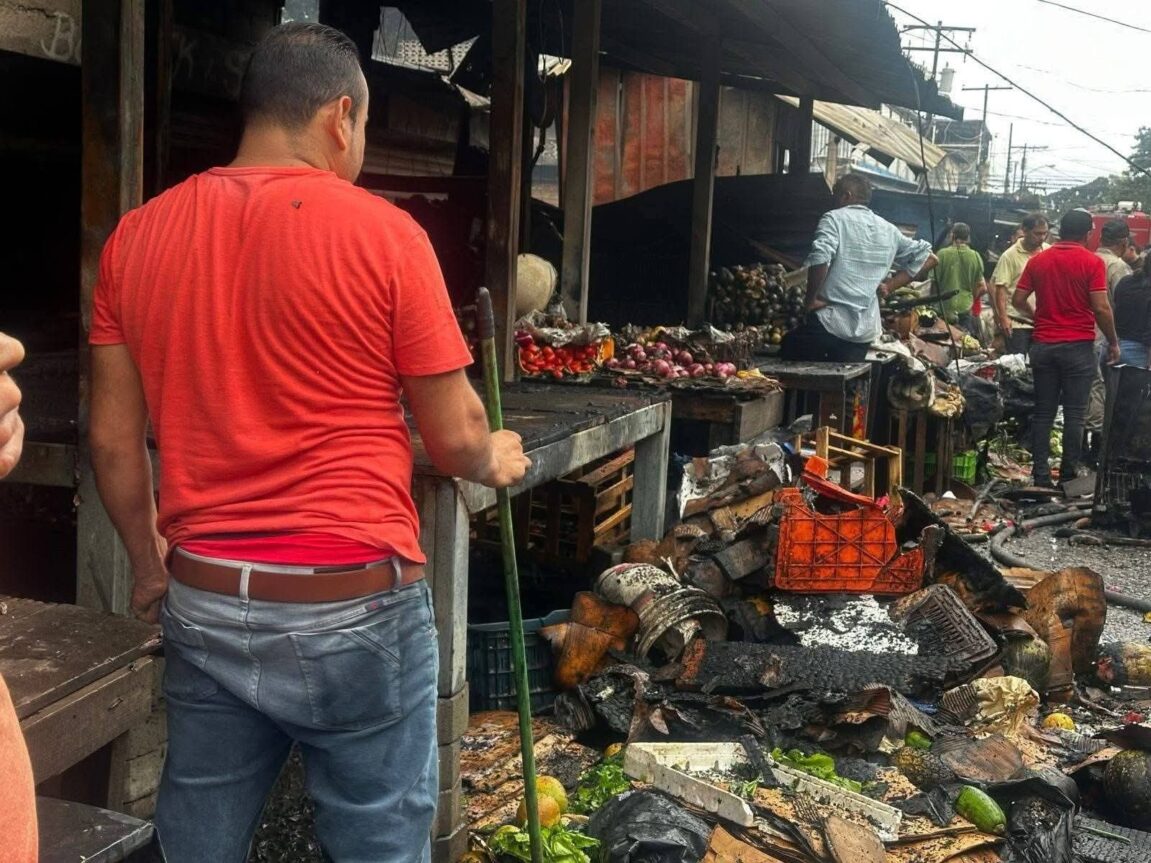
What happened in Guatemala is not an isolated incident. In Honduras, a market also recently suffered a devastating fire. It seems like a sad coincidence, but the reality is that there are underlying problems that have not been resolved. Many of our markets have very old electrical installations, cables hanging everywhere, and aisles so narrow that when an emergency occurs, people cannot get out quickly and firefighters cannot get in on time.
The fire in Honduras reminds us that safety is not a luxury, it is a necessity. Many vendors lost everything: their merchandise, their shelves, and, most sadly, the money they had saved with such effort to pay off debts from the previous season. Now, they find themselves in a situation where they must start from scratch, with the weight of sadness on their shoulders.
If we walk through the remains of the fire today, we don’t just smell the smoke. We feel the silence of loss. There are heartbreaking stories, like that of Ana María, who had been at her stall for 20 years and said with tears in her eyes that “the fire took even my memories.” Or Noé, who just the day before had invested all his savings in new merchandise in anticipation of January sales.
These people have no insurance to give them their money back. Their only security is their daily work. That is why the emotional impact is so strong. It is not just money; it is the feeling that the future has suddenly become bleak. Many of these vendors are elderly people or single mothers who have no other means of survival than their market stall.
It is at times like this that we must show that we are brothers and sisters. Information is important, but action is more important. When the vendors set up shop again, even if it is under a nylon sheet or on a makeshift table, let’s go buy from them. Every quetzal or lempira we spend at the market is a seed for them to flourish again.
We must ask municipal authorities to invest in the markets. They need secure roofs, a constant water supply, and new electrical wiring so that this does not happen again.
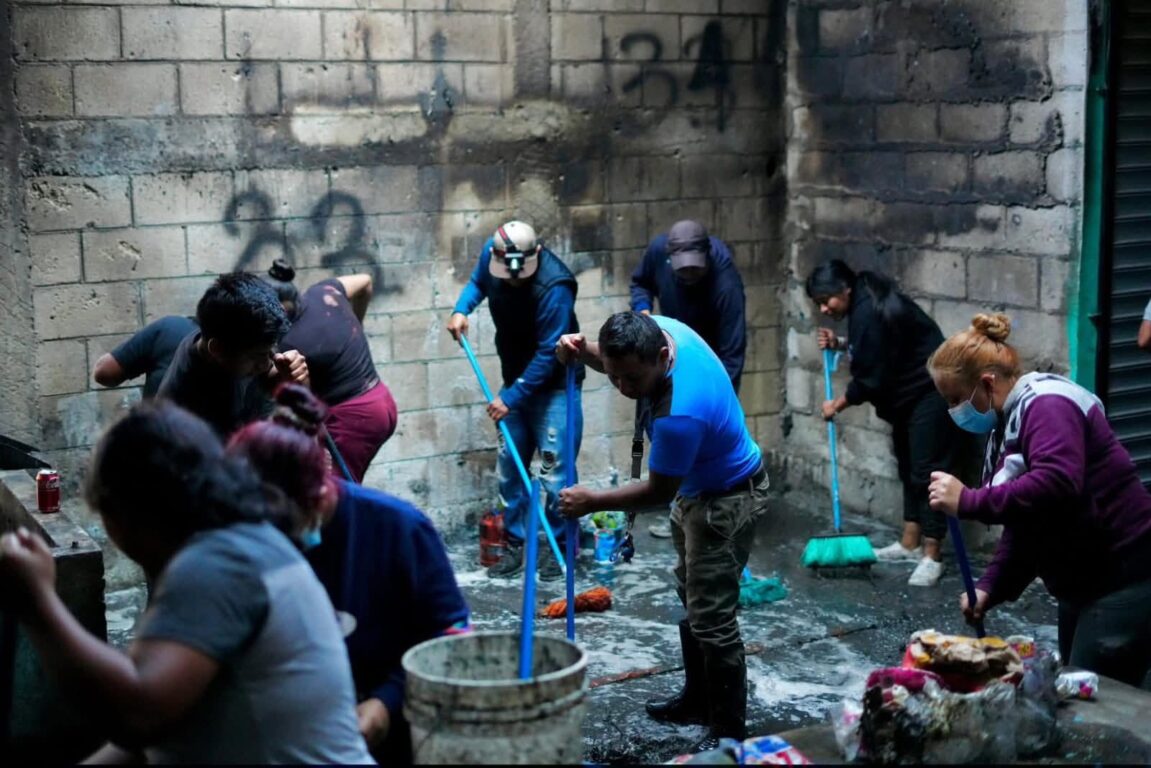
Despite the smoke and destruction, there is something that the fire could not burn: the desire to move forward. It is incredible to see how, just hours after firefighters extinguish the last embers, vendors are already there with their brooms and shovels, cleaning up the place.
That courage is what should inspire us. The market in Guatemala and the market in Honduras will once again be filled with colors and cries of “What can we get you? Come on in!” But for that to happen more quickly, they need the government, organizations, and their customers to lend a hand.
The news is appalling, yes. But the response of the people can be beautiful. Let’s not allow these families to be forgotten. Let this fire serve as an opportunity to build, from the ashes, more dignified and safer markets for the workers who feed our nations.
Jorge Peralta, member of FENTRAVIG (National Federation of Informal Workers and Vendors of Guatemala) comments:
“Well, first of all, it is unfortunate that the markets still do not meet safety requirements. This is not solely the responsibility of the tenants; it is something that the authorities must provide for because they are tenants of the municipal authorities, in the case of the markets, the municipal markets that burned down.
Unfortunately, the authorities are only interested in collecting rent and do not provide the necessary elements. The laws in Guatemala have not been adjusted to protect vendors, including the municipal code, which governs all municipalities and does not contain specific guidelines for each market. That is why we are still unprotected.”
For our part, we view the neglect of the markets with great sadness and concern. We do not blame the authorities for the fires, but we do blame them for the neglect of the markets.
We hope this year will be different.
Anibal Banegas, member of FOTSSIEH (Federation of Organizations of Workers in the Social and Informal Sector of the Honduran Economy) comments:
“What happened on December 29, 2025, at the Medina Market is very sad. The fire affected 160 colleagues. Among them, 32 members of the SULMERH union lost everything and others lost part of their merchandise. Colleagues who sell on the street were also affected.
Unfortunately, the firefighters were unable to enter in time because the entrances were blocked. But the good news is that they received help to start over: the current president gave 10,000 lempiras to each person affected. Before leaving, President Xiomara Castro handed over 9.3 million lempiras, which were distributed among the 160 people affected. This latest support was achieved thanks to the efforts of the Federation, through a colleague in Tegucigalpa who dealt with SEDESOL. Thanks to this effort, our colleagues are now setting up again to work in this new year.”