Subscribe to our E-Letter!
Subscribe to our e-mail and stay up-to-date with news and resources from street vendors around the world.

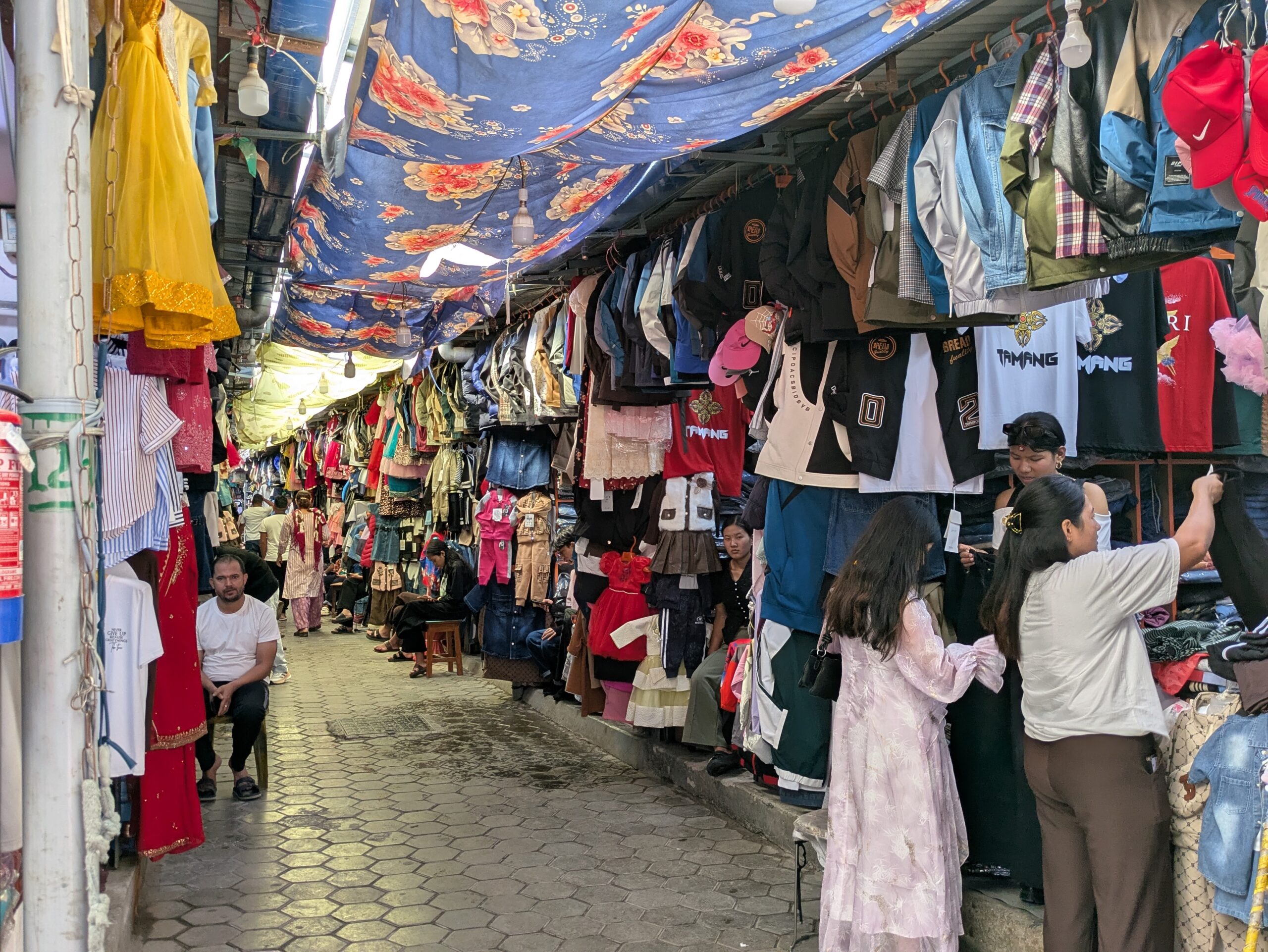
In 1980, Badri Khatiwada opened a tea stall. Today, he is president and “godfather” of the nationally renowned, well-organized Sano Bazar, a market, which has 156 stalls in the Municipality of Gokarneshwor, Kathmandu. It has wi-fi and turbo fans to beat the heat, closed circuit TV and security guards, tiled floors and a roof overhead. There is health coverage for vendors, toilets and a central office. It’s clean and well-managed, with market and union committees collaborating to keep everything running smoothly.
The most remarkable aspect of the market is that through impressive collective bargaining, the local municipality provided everything except stall fixtures and goods.
“I knew nothing of worker rights [when I started out], but I imagined something like this,” said Badri, who is now 62.
The path to establishing this market was filled with obstacles for Badri. In the ‘80s, his tea shop was burgled, and he was coerced into giving free tea. Fed up, he figured there would be strength in numbers. He gathered together 10 other vendors to set up a temporary market; when local residents protested, they found a vacant public lot in a hillside gorge.
As they worked at filling in the gorge to make a flat space for their market, some locals tried to burn them out. “About 75% of the local residents were against us,” said Badri. They continued their work, nevertheless, and the new market opened in 1993. Unfortunately, the violence continued over the years; in 2000, Badri was beaten up, but he persevered.
“I felt people needed me,” he said.
In 2001, he formed a market committee and became its founding president; vendors also joined the Nepal Street Vendors Union (NEST), an affiliate of StreetNet International, which protects and promotes their rights. NEST set up a union committee at Sano market as well.
That alliance was essential in 2022 when the municipal government ordered the vendors to vacate their market so it could construct an administration building. What happened then was a “success story of collaboration,” said Badri.
After intensive collective bargaining, NEST and the two market committees convinced the municipality to help them. The municipality built a new, well-equipped market in an unused lot across the street from the former market. The municipality collects rent of 5,000 NPR (about $35 USD) per month for each stall and has signed a legal contract for 158 vendors.
“This is an impressive example of how informal economy workers can work with local government,” said NEST President Maya Gurung. “It is known nationally and internationally.”
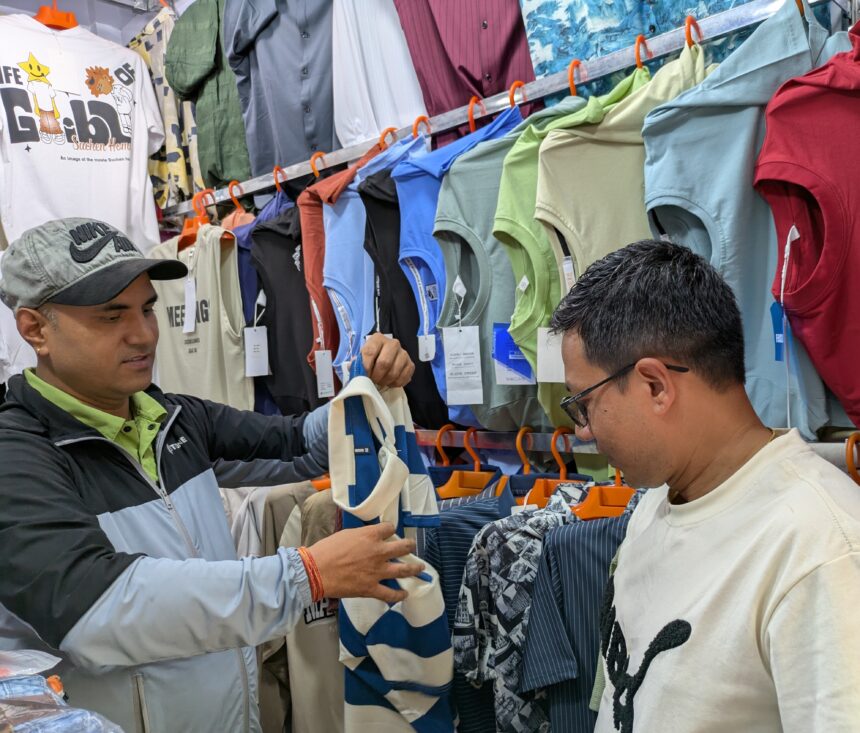
When the new administration building is completed, perhaps in five years time, there will be space on two floors for Sano Bazar. Meanwhile, vendors are content and profitable in their current location, selling mostly clothing, bags and footwear.
Manju Karki, a NEST central committee member, has been vending bags, shoes and other articles for 15 years. Her husband also has a stall; their children are 18 and 10. Manju, 42, says she likes being the “owner of my own work.”
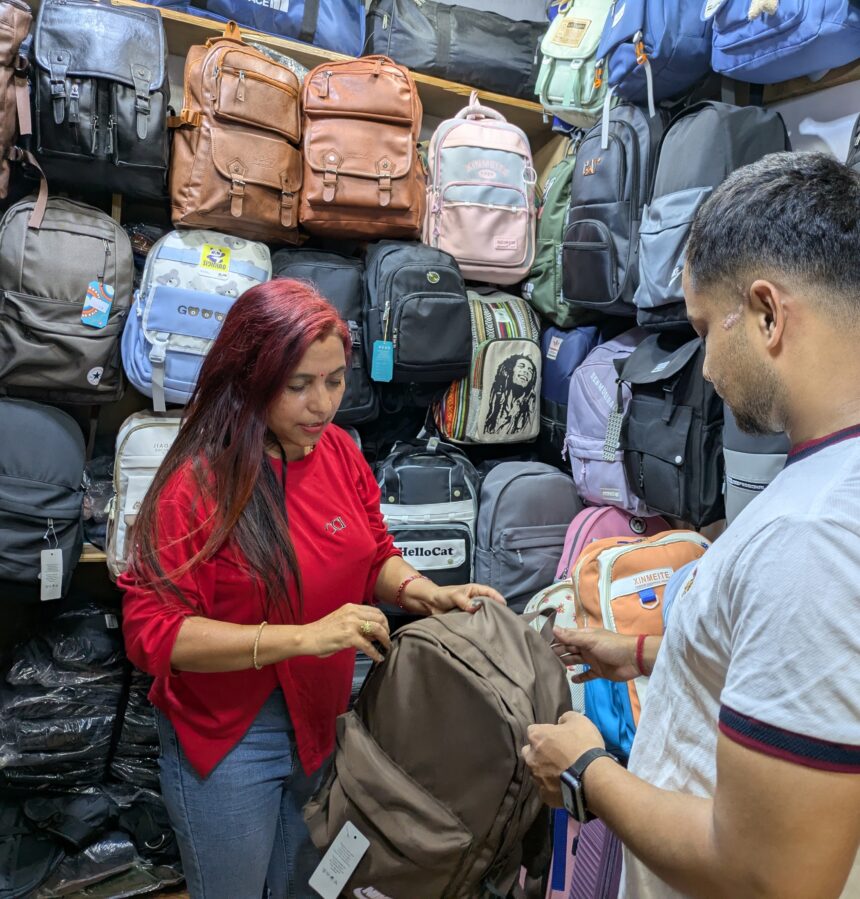
When she started working, most vendors were already NEST members. Manju liked its goals and ideology and joined NEST 12 years ago. She has taken training on the fundamentals of organization and leadership that NEST offers in conjunction with StreetNet International, a global organization of informal economy workers in 50 countries. Manju was initially NEST’s Kathmandu Valley committee secretary and, in 2022, became a NEST central committee member.
“NEST is like a guardian organization for vendors,” she said. It provides collective bargaining, can help with legal battles or negotiations and has a memorandum of understanding with a nearby hospital so vendors can get check-ups and care. It is also affiliated with the General Federation of Nepalese Trade Unions which has a solidarity fund for catastrophic health needs, like surgery, which vendors can access. Manju said all these benefits help her recruit members from other markets.
Her biggest desire now is for vendors to be allowed to join Nepal’s contribution-based social security fund, which would provide a pension and other benefits. Vendors are already registering for it, and Maya at NEST is optimistic that legislation will pass in 2026.
Another vendor, Nawaraj Karki also wants access to social security. “Hopefully, through NEST, it can one day come to the informal economy workers.” Nawaraj, 39, is intensely involved in the politics of vending as NEST secretary for Bagmati Province (which includes Kathmandu) and vice-secretary for the market committee.
Originally from a rural area of Nepal, Nawaraj was working in a marketing business, when he decided to be his own boss. He immediately saw the advantages of vending and convinced 15 of his friends to become vendors too. Nawaraj has been a vendor for 17 years; today he and wife sell gents’ clothing to many loyal customers. He works 16-hour days with one day per month off. They earn enough to support nine family members, including their son, 16, and daughter, four.
Nawaraj joined NEST in 2011 and became secretary of NEST’s market committee six years ago. For four years, with shifting membership, he was its only committee member. Those were difficult times, he recalls but he was motivated by “Sister Maya” and market committee members and young vendors. “We formed a team and kept it going.”
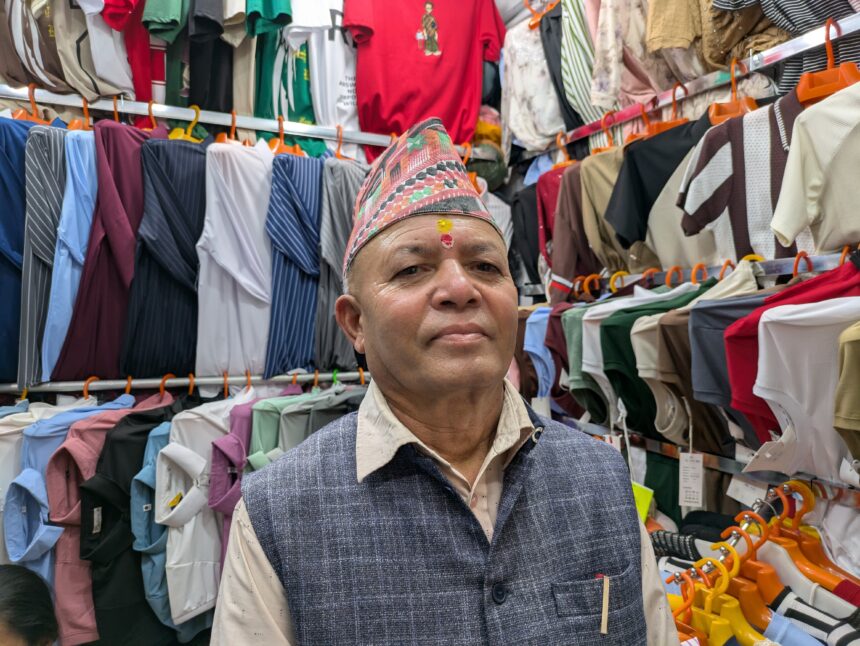
He remains enthusiastic about the value of NEST: “When there is trouble, NEST will help,” he said. In particular, he recalls NEST’s expertise in collective bargaining which led to establishing the current market. Others have also seen the value: NEST’s market committee is now full and 100 vendors are members. Across Nepal, 12,500 vendors belong to NEST.
Nawaraj recently became NEST’s secretary for Bagmati Prov. Now that he’s on the provincial committee he hopes to take training from NEST: “I’ll be grateful for the chance.” As for the future, he’s happy in his new position. “I’m committed to NEST and to serving our members.”
About the author of this story: Barbara Sibbald is a Canadian journalist whose work includes articles on HIV/AIDS in Swaziland and Manipur, India, and drug resistant TB in Mumbai, India.