Subscribe to our E-Letter!
Subscribe to our e-mail and stay up-to-date with news and resources from street vendors around the world.
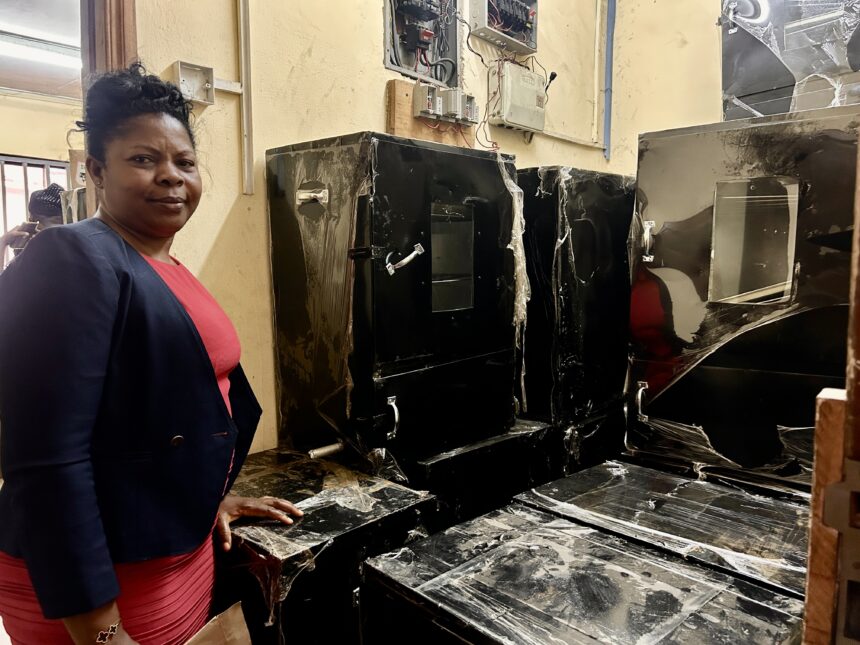
At the Lagos offices of the Federation of Informal Workers’ Organisations of Nigeria (FIWON), shiny black ovens are stacked to the ceiling, and cardboard cartons line the walls. But this is not a warehouse, it is a cooperative with 50,000 members and a goal of making sure more people in Nigeria can do something productive to help support their families.
The boxes contain a range of materials, from car diagnosis kits to sewing machine repair tools, from propane cylinders to electric mixers. And the ovens: those are the reward for people who complete the three-month vocational training in cooking and baking.
Susan Terry graduated from the program two years ago and received an oven, along with a propane cylinder. “I am a caterer now and I am doing well, my business is growing,” she said before enthusiastically listing off what she sells in front of her home: bread, buns, cakes, fish pies and meat pies and most especially, her renowned chin chin, a fried dough snack popular in West Africa.
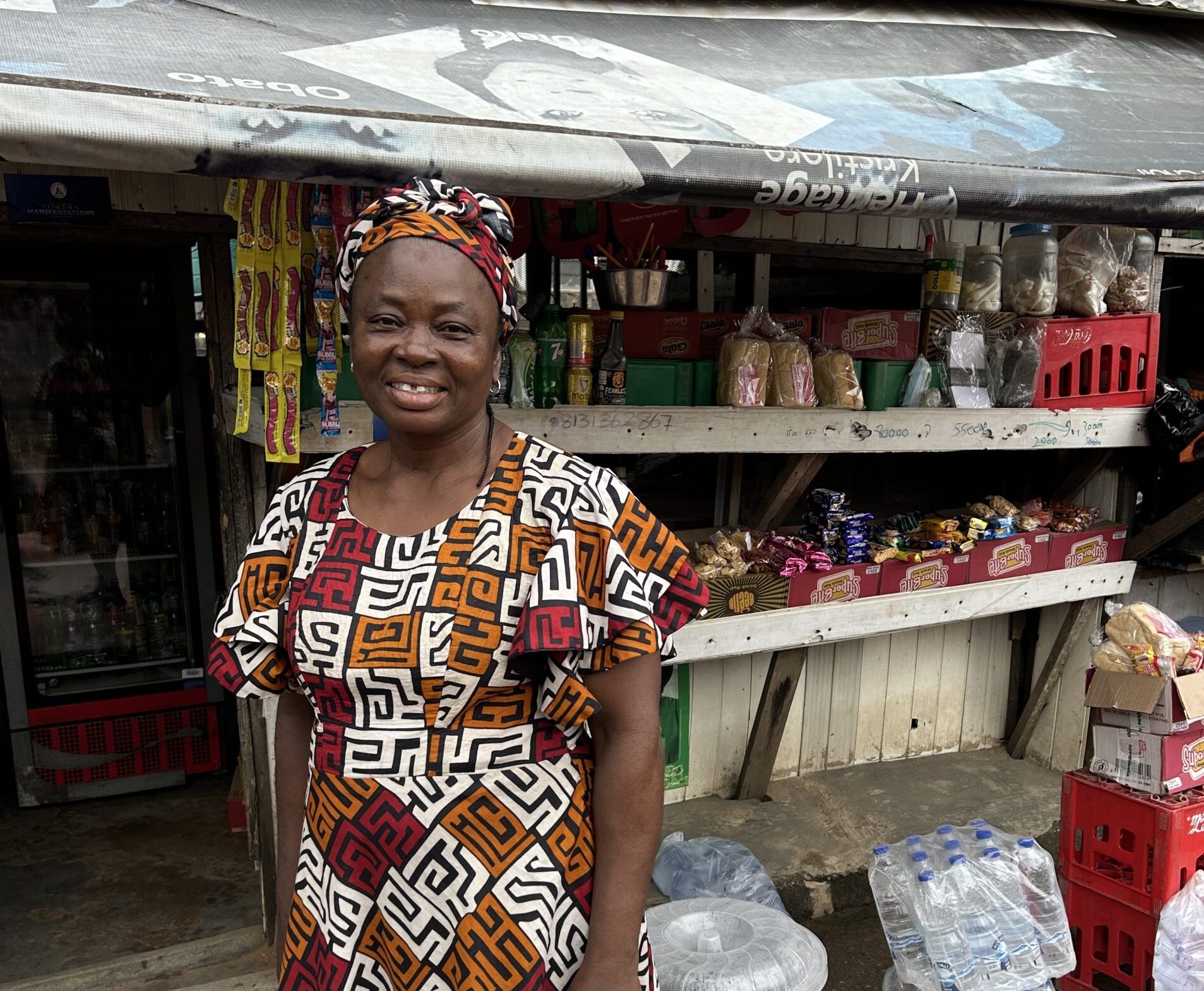
FIWON’s training programs, however, are not just for those starting out in an enterprise. Vendors with many years in the business like Augustina Iweka, who sells food and drinks near the FIWON office, has also availed of those programs. She joined FIWON years ago and has received both training and financial support through a loan to buy more goods to sell.
“They have supported me with what they have to boost my business,” she said. “Before FIWON, there was more struggle.”
Her income helped her raise four children and now allows her to help her youngest daughter, Favour—who is studying philosophy—pay for her schooling.
FIWON also runs a myriad of training programs for families and youth, focusing on necessary but hard issues such as domestic and sexual violence and drug abuse.
FIWON is a cooperative, but it cannot afford to run all its diverse programs using the funds its membership generates alone. Instead, according Towolawi Jamiu, the accountant at the Lagos office, it relies on the support of corporations and individuals interested in empowering people to build a functioning, prosperous and more democratic Nigeria.
“Everything we do is for our members,” he explained, noting that the membership encompasses a great diversity of informal workers, from street vendors and domestic workers to waste pickers, artisans and drivers. As the membership grows, the federation grows stronger—but the administrative needs also grow more complex.
Right now, most of the staff who make FIWON possible are working as volunteers. “We are trying to get to a level of paying people for their time and effort,” Jamiu said.
While FIWON’s work is most evident at the micro-local and individual level, Jamiu cites the international partnerships as key to what makes it viable. Key partners and funders like the International Labour Organization (ILO) and the network StreetNet International, to which FIWON is affiliated, lend a supportive framework that enables FIWON to prosper in much the same way a propane cylinder can help a caterer’s business to grow.