Subscribe to our E-Letter!
Subscribe to our e-mail and stay up-to-date with news and resources from street vendors around the world.
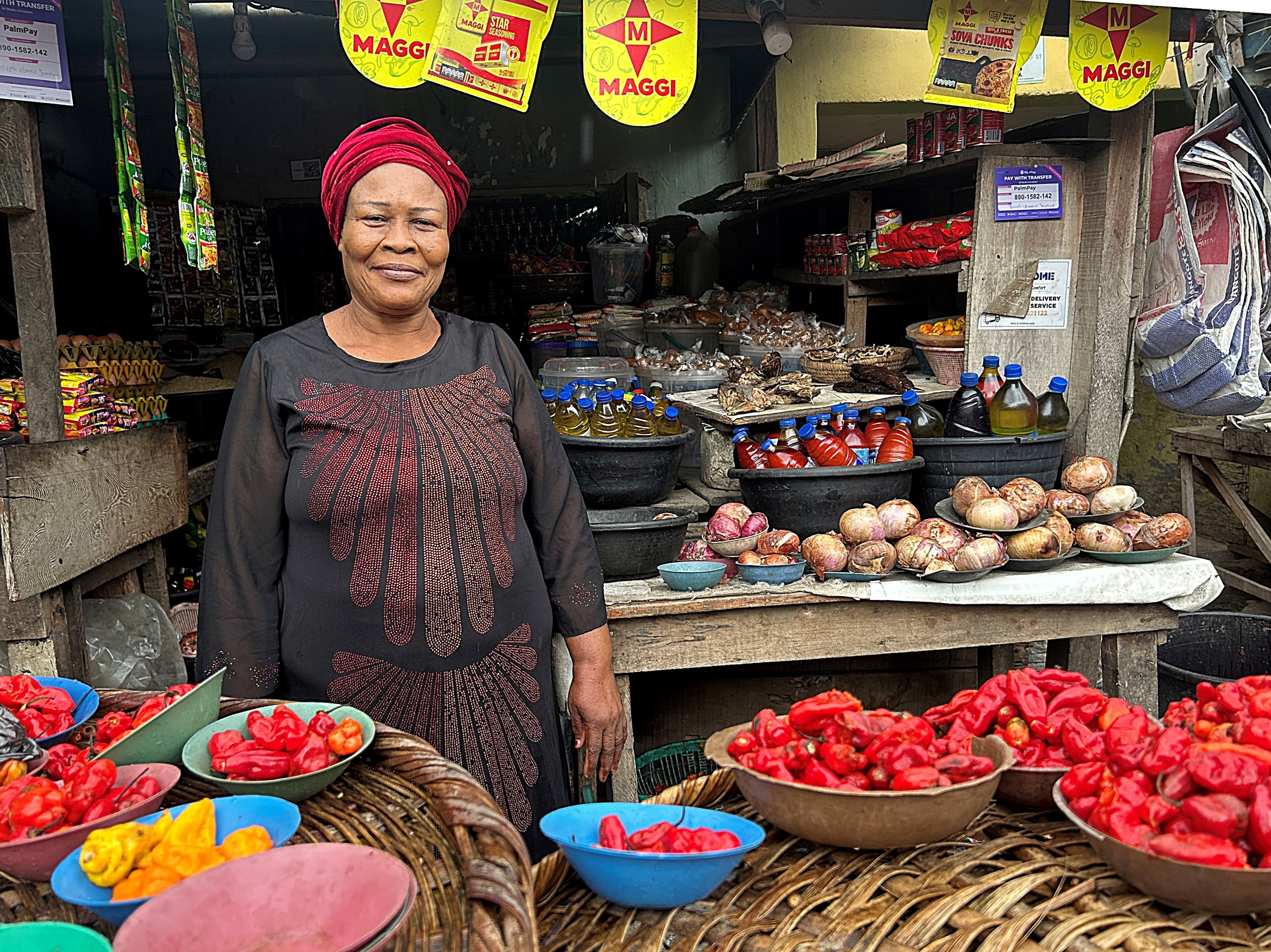
Photo: Chioma Joseph, Informal food vendor in Lagos, Nigeria
In the front of Chioma Joseph’s small store, vivid red chilis catch the eye, drawing it in. From a tower of fresh eggs to brightly wrapped sweets to artfully hung spices and interlaced packages, her seasoned expertise is on display in this small, streetside market.
Unfortunately, good marketing and many years of experience are no guarantee of success for a self-employed market vendor in Lagos, Nigeria. Several years ago, when she fell ill, Chioma’s business began to suffer. The cost of accessing health care in a country without a social safety net for its informal workers took much-needed funds away from her ability to stock her store.
A customer, learning of Chioma’s struggle, suggested she join a cooperative called the Federation of Informal Workers’ Organisations of Nigeria (FIWON). The woman explained that FIWON invites membership and provides benefits—including training, equipment, low-interest loans and healthcare insurance—to Nigeria’s self-employed informal sector workers, who account for over 60% of urban workers. In Lagos, Nigeria’s biggest city, that represents 12 million workers.
But Chioma was not interested. She had heard too much about unreliable cooperatives who take one’s money and then disappear, leaving a person with nothing.
Despite reassurances, she resisted joining. Then her husband died, and things became much worse—for her finances and her health. Fortunately, the customer returned, and again urged Chioma to join FIWON, emphasizing FIWON’s group health insurance plan for all members and their families. Chioma was finally convinced to join.
She says she owes her current well-being to the cooperative. Membership gave her health coverage—a compulsory group benefit possible for the large pool of workers—and this allowed Chioma to attend a hospital, where the heart palpitations she experienced following her husband’s death were diagnosed and treated. She says she could never have afforded the medical care, nor the daily medication she must take, without FIWON.
FIWON membership brings many other benefits, including a regular savings plan. “FIWON is helping me to save,” Chioma notes, and those savings create a bridge to meet the challenges of being a self-employed vendor. “When the market goes down, I can take from my own savings.”
A short distance from this informal market, a large corporate supermarket looms over its ample parking lot. People who can afford to shop here can get everything they need in this well-staffed, air-conditioned retail space. That competition limits the customer pool for informal vendors.
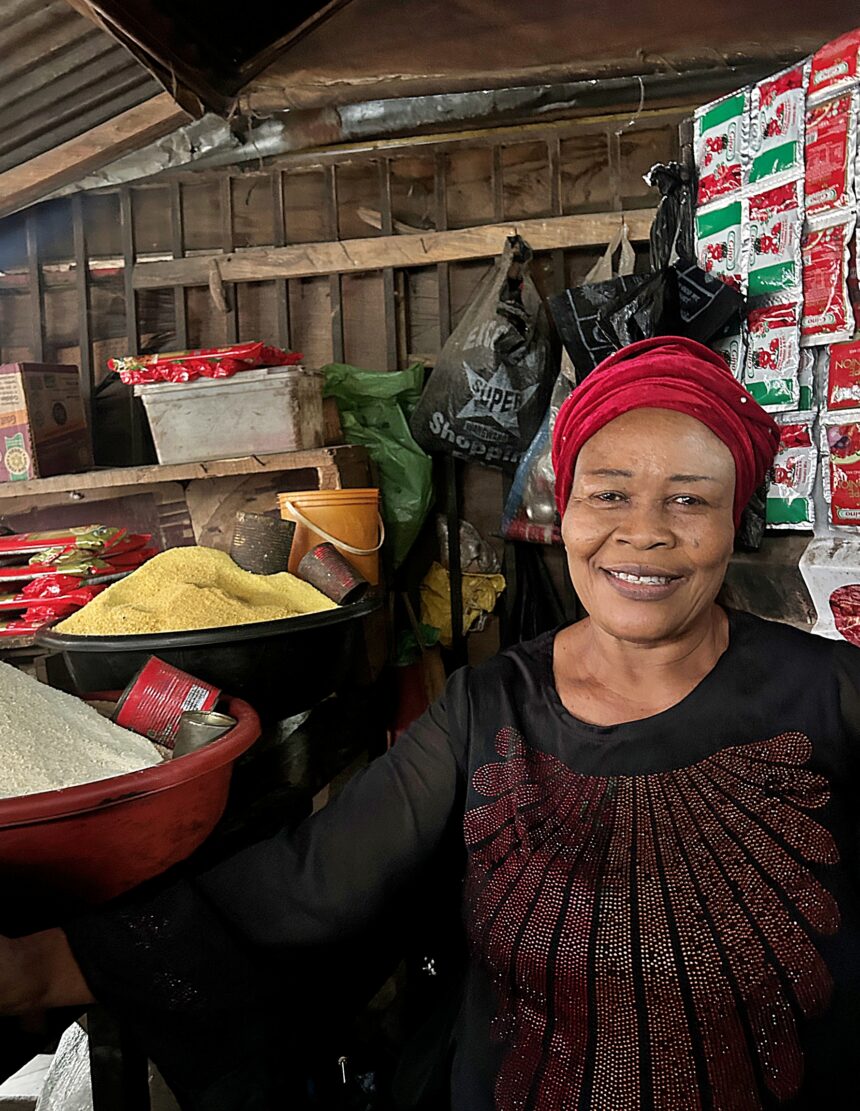
Inflation is another issue. She points to a mounded pile of rice in a large metal bowl. Last week, she says, she paid 60,000 naira for a kilo of rice. This week it was 63,000. However, her customers cannot afford a big increase in their food bills, week over week, so Chioma’s bottom line must absorb some of the rise in costs.
Nonetheless, Chioma remains hopeful, thanks to the support she receives by being a part of a cooperative, which in turn is part of the worldwide StreetNet International network. Although she struggles to pay her rent—which also increases incrementally—her dream is to buy property through a FIWON-provided mortgage and someday, own her own home.
The once-skeptical Chioma is now a firm devotee of FIWON and has personally convinced many other vendors in her market to join.
“Through the help of God and FIWON, we are managing,” she says.