Subscribe to our E-Letter!
Subscribe to our e-mail and stay up-to-date with news and resources from street vendors around the world.

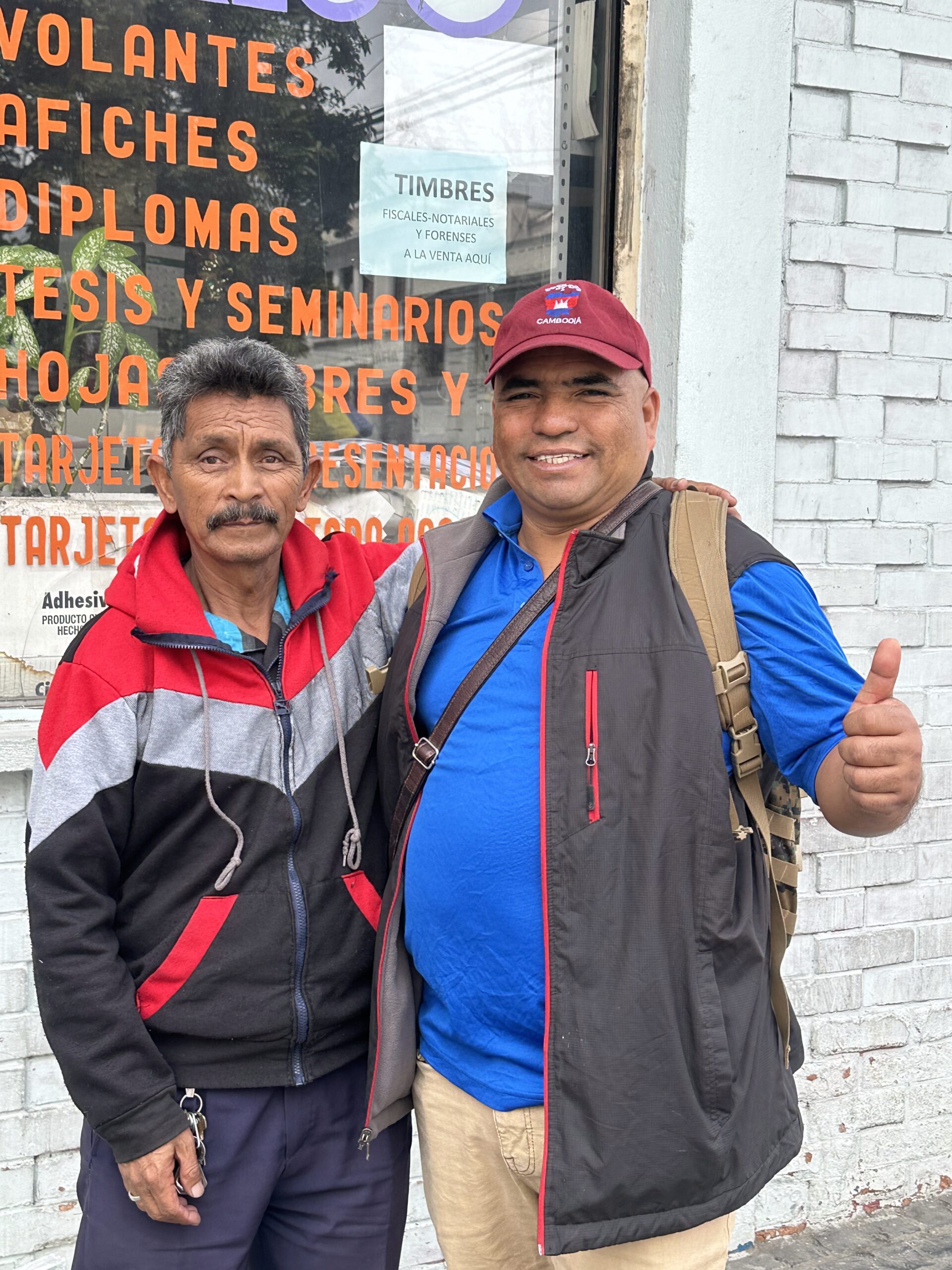
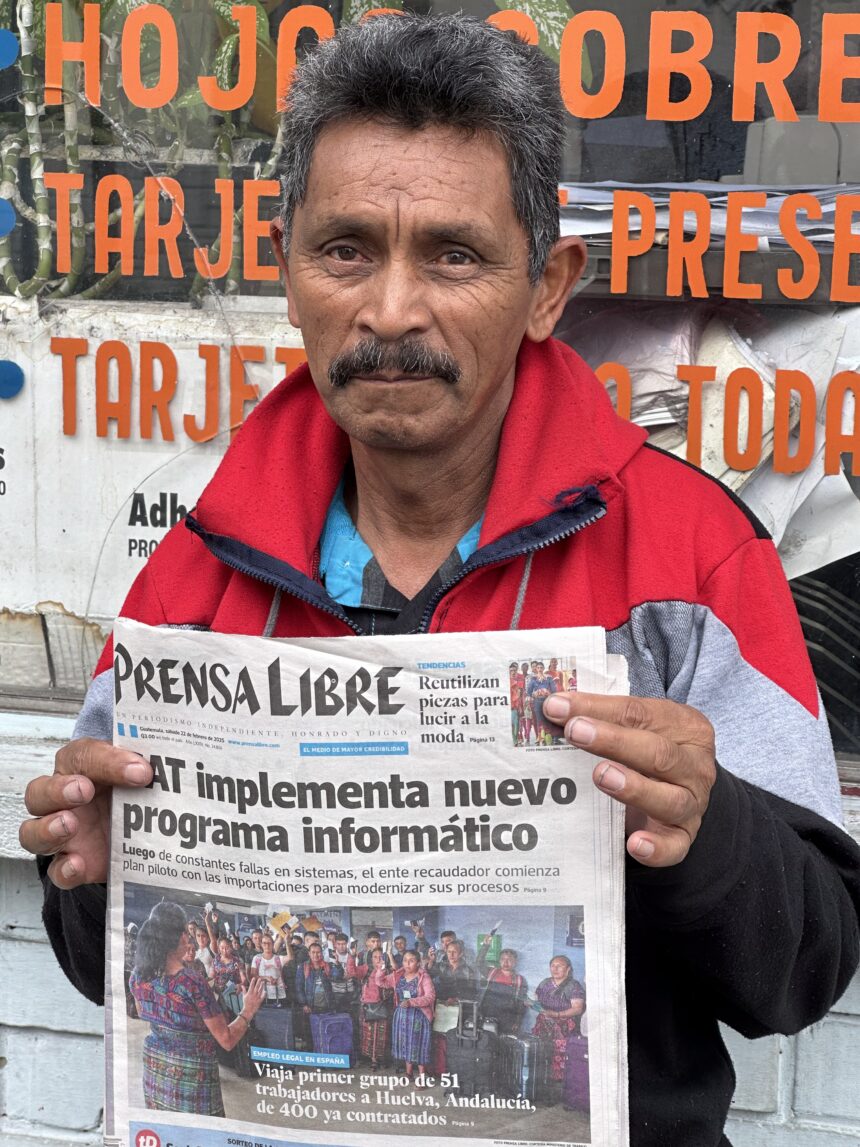
Julio Gatica Arimando Cruz speaks softly about atrocities he’s witnessed as a street vendor in Guatemala City: the violence. Arrests. Confiscation of goods. Injuries, even the murder of a colleague. In 40 years, he’s witnessed countless injustices and yet, he stands straight and speaks with hope.
Julio, 64, is a hawker who sells daily newspapers as well as rat and insect poison and traps. He rises daily at 3 a.m., buys his papers and starts selling at five. Later, he shifts to another venue near Plaza de la Constitución, lays his papers and poison on the sidewalk and sells until 3 p.m. Monday to Saturday, this is his routine. His wife and two sons, 18 and 22, are also hawkers.
Julio sold a lot more and his life was easier when he was a hawker on 6th Avenue, a pleasant road running off the plaza. But, in 2010, the municipality decided to turn the avenue into a pedestrian mall mostly to attract tourists. Vendors weren’t part of their vision, so they were evicted – often with violence.
“Many suffered.” Julio looks stricken as he recalls one colleague, who was roughed up, fell and hit her head. “She was selling sweets, typical sweets. She suffered this violence because she was running a business.” A clothing vendor was shot and killed by police who then tried to hide the fact.
This violence prompted Julio to begin working with FENTRAVIG the National Federation of Independent Workers and Street Vendors from Guatemala, an affiliate of StreetNet Internatonal.
Jorge Peralta, who founded and was then president of FENTRAVIG, said they don’t know how many were injured on 6th Avenue. The union held a demonstration, but police used tear gas and started hitting vendors. Some were jailed and it was feared they would be “disappeared.” With help from a human rights organization, FENTRAVIG was able to free them.
FENTRAVIG was the first to denounce the authority’s actions on 6th Avenue, “but there was no legal action because [the authorities] do what they want,” said Jorge, who is now executive secretary of the 5,000-member union. Mainstream media wasn’t interested in their plight: “They blamed street vendors.”
FENTRAVIG wrote three letters to municipal authorities, including then-mayor Álvaro Arzú, asking him to consider their situation, said Julio, his voice rising. “The problem is that to the government we were part of the informal economy, as if we were stealing from people, but that’s not what we do. We are working…. we are actually self-employed workers.”
As if the forcible evictions off 6th Avenue weren’t bad enough, the mayor also sent letters to area shop owners telling them not to allow vendors to sell outside their businesses.
“They didn’t want us on the street at all,” Julio concluded. “This is something I feel deeply about.” He was able to keep his post outside a stationery store because he’s friends with the owner.
The injustice of Paseo de la Sexta (walk of the sixth), prompted Julio to start taking union workshops on topics like capacity building. As a local leader, he offers advice, helps with problems such as the confiscation of goods, shares information and explains what it means to be part of a union. “We need to be united, to work together,” he states in his typical straightforward manner.
He also started helping people become vendors. “Lots of people need work, they are unemployed. I share the idea that if you don’t find a job, you can sell something to buy food and a place to live. I teach them to sell products.” This is the aspect of his work he likes the most. His key tip: “Recommend the product personally.”
And what about retirement? “A retirement without the help of authorities is not possible,” he said. “I hope God will give me strength to keep fighting.”
“Personally, something I wish for with all my heart, is that my children don’t suffer, don’t have to go through this violence.”
Jorge adds that “maybe we won’t see the change itself, but we are creating space for change.” He point to the newly formed “massive” Mercado Unido de Guatemala as the way forward. Julio concludes that “Something I hope to see before dying is all street vendors being free to make their living.”
About the author of this story: Barbara Sibbald is a Canadian journalist whose work includes articles on HIV/AIDS in Swaziland and Manipur, India, and drug resistant TB in Mumbai, India.