Subscribe to our E-Letter!
Subscribe to our e-mail and stay up-to-date with news and resources from street vendors around the world.
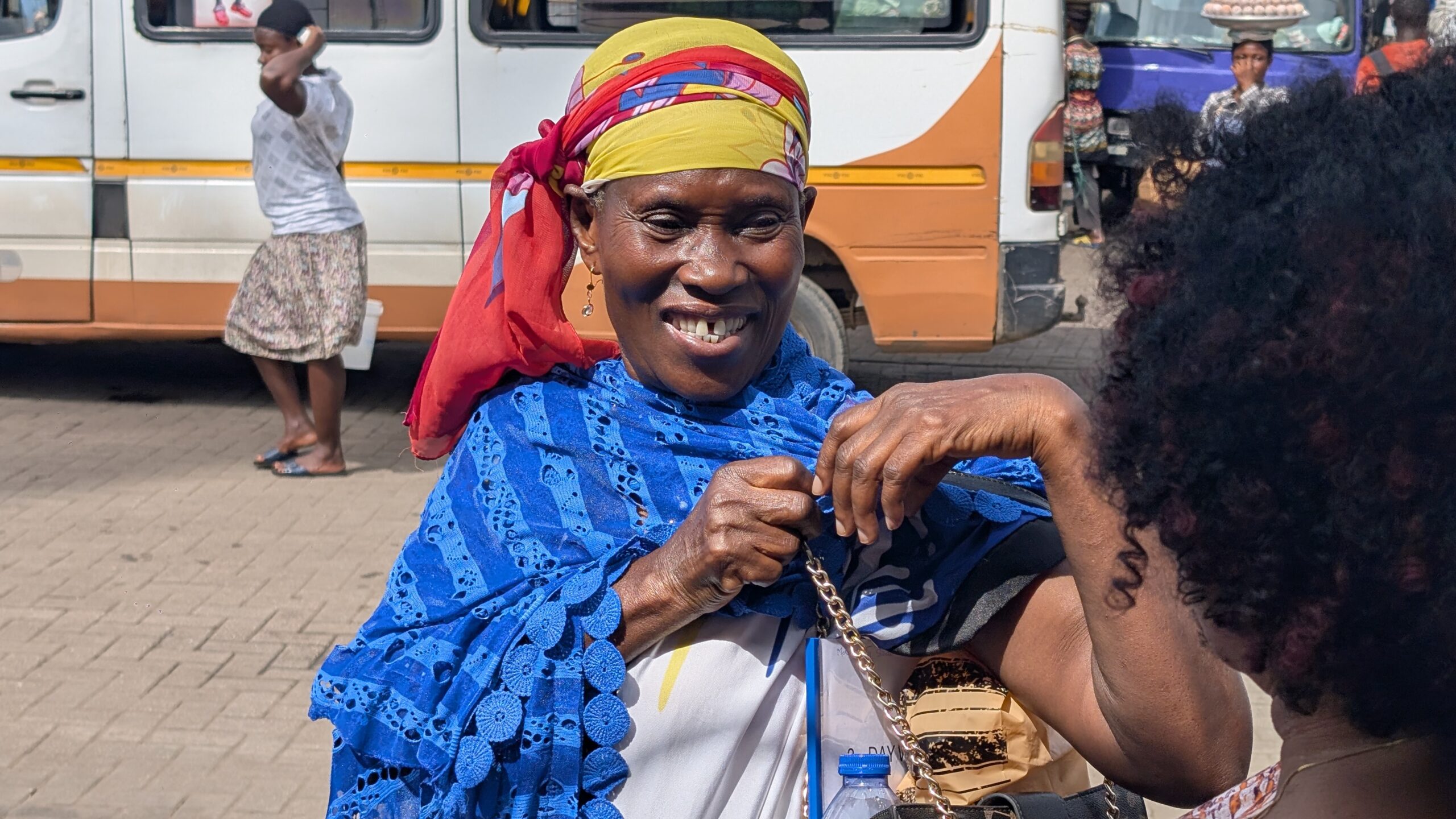
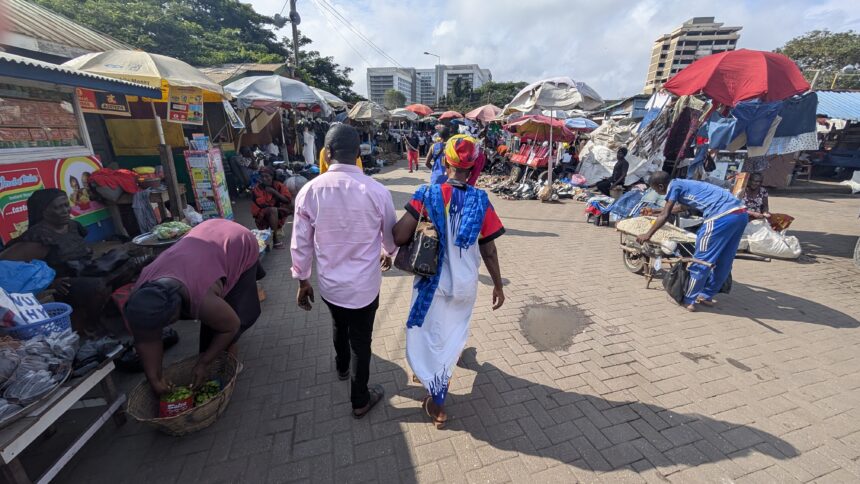
In the markets of Ghana, life is measured less by the ticking of clocks than by the repetition of gestures: arranging goods at dawn, negotiating prices, packing up after sunset. For Mariama Maisha, 55 years old, the rhythm of these gestures has defined her adulthood. Like many traders, her days are long, her margins thin, and her survival depends on constant adjustment. To endure in such conditions requires not only resilience, but also imagination—the capacity to think of tomorrow even while fighting to make it through today.
Mariama left school early and turned to trading as her main livelihood. She married young, raised three children, and, after the death of her husband, carried the responsibilities of the household alone. Pauses in her work—such as staying home with her babies—often meant losing her stock and her small savings. Each return to the market felt like starting from nothing. “When I came back, my goods were spoiled,” she explained. “I had to begin again.”
But instability came not only from poverty or family obligations. Ghana’s markets are governed by figures known as Queen Mothers, local women leaders who hold authority over trading spaces. They collect levies and enforce rules, often inherited through traditional chieftaincy lines. In principle, they are meant to safeguard the market and its traders. In practice, Mariama says, accountability is weak: “They promise us toilets, daycare, better stalls—but the money disappears. When you ask questions, they threaten to sack you from the market.” The result is a system where women who already live on fragile incomes are further burdened by opaque demands.
At first, Mariama endured this reality in silence, believing nothing could change. But slowly, conversations with other traders revealed a shared frustration. What once felt like personal misfortune was actually systemic exploitation. The women began to meet, to compare notes, and to explore possibilities of collective action. For the first time, Mariama understood that survival did not have to mean isolation.
This was not easy work. Organizing required trust, time, and courage. Mariama and her colleagues reported the irregularities to the municipal assembly and began considering their first demonstration. For her, these gatherings were a turning point: the realization that strength multiplies when experiences are shared, and that dignity is built not only in private struggles but in public voices raised together.
Her favorite hours of the week, however, are not in the market but at home on Sundays, when she can cook for her family. Preparing fufu with light soup is less about tradition than about presence: “When I cook and we eat together, I feel peace,” she says. In those moments, food becomes a way of reclaiming time from the harsh demands of the market, an assertion that life is more than survival.
Mariama once loved to dance panlogo, the traditional Ghanaian dance of rhythm and waist. But since her husband’s death, she has stopped. “I had to take care of my children,” she explains. “There was no more joy for that.” Responsibility has replaced performance; her movements are no longer for entertainment but for endurance. Yet in her insistence on organizing, one sees a different choreography—the collective gestures of women traders learning to defend themselves together.
The problems persist. Leaders continue to collect money without transparency. Promises of infrastructure vanish, while land is sold to private developers. “They take from us,” Mariama says, “but they do not help us.” Still, she and her colleagues refuse to remain passive. They prepare reports, they meet discreetly, they strategize. Each act may seem small, but together they sketch a form of resistance that is both practical and hopeful.
Looking ahead, Mariama imagines a different role for herself. In five years, she hopes to run for Assembly, representing her community with the knowledge she has gathered in the market. She dreams of having her own shop with a small office—a place not only to sell goods, but also to organize documents and ideas. These are modest visions, but they point to something larger: the desire for a life not defined solely by survival, but by agency.
When she speaks to younger traders, Mariama’s advice is direct: join the union, demand accountability, do not accept silence in exchange for your money. Her words carry the authority of experience. She knows that resilience alone is not enough; it must be paired with solidarity. For her, cooking for her family and organizing with her peers are parallel acts: both are ways of making sure that what exists today can sustain tomorrow.
Mariama’s story is not simply one of hardship. It is also about the slow construction of dignity in a world that often denies it. She has learned that survival is not only about enduring, but about shaping conditions with others. In this sense, her life is a reminder: resistance does not begin with grand speeches or sudden uprisings. It begins in everyday acts—trading, cooking, meeting, deciding together—that, over time, generate the possibility of justice.