Subscribe to our E-Letter!
Subscribe to our e-mail and stay up-to-date with news and resources from street vendors around the world.

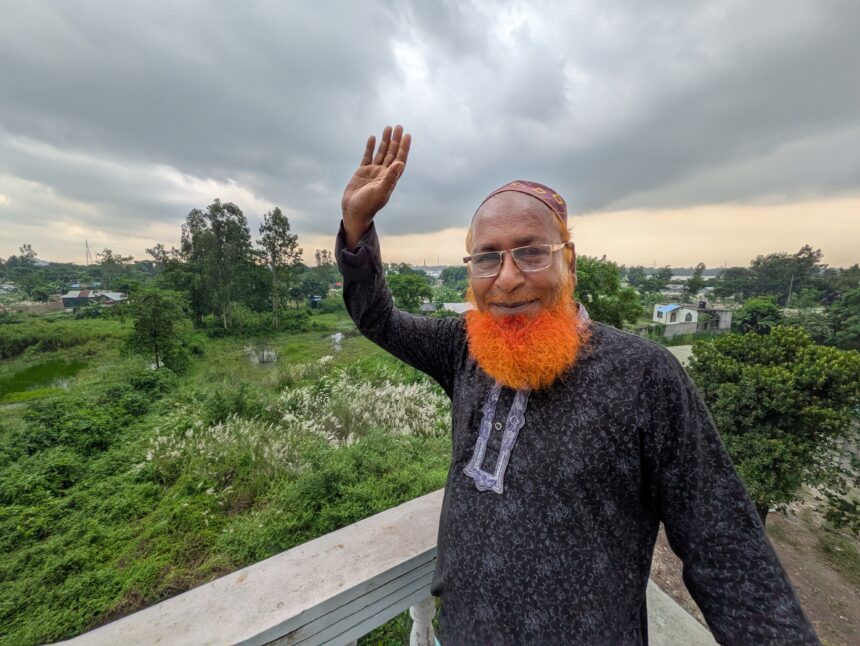
When Dacha hawker Kamal Siddiki visited India in 1990, he was astonished to see how they’d organized themselves to work in three shifts. “After I saw that, I wondered why we didn’t have an organization here to make our lives better. I was inspired,” said Kamal.
In 1991, he started Bangladesh’s first hawker’s organization, the Bangladesh Chinnomul Hawkers Samity with a goal of acquiring rights and ending extortion; hawking is illegal in Bangladesh.
Through collaboration with other organizations, they’ve come a long way. The culmination of their workis a model hawkers’ community in Nayaranganji, outside Dacha that includes housing, daycare, a medical clinic and home-based work opportunities for spouses of the mostly male hawkers.
It wasn’t a smooth or straight road to this model. Kamal’s initial aim was to set up a recognized market, to end the extortion. He thought he’d made political progress when, in 1995, the Prime Minister agreed to allocate marketplaces.
“But then the regime changed, so we were back to the previous situation,” said Kamal who began working as a hawker of bed and pillow covers in 1966.
This happened twice — with the ruling party agreeing to a market, then changing — before Kamal realized that they needed laws not a commitment from a political party. The authorities did take notice, but not in a positive way. Kamal was arrested in 1997 and spent 21 days in jail. He was accused of taking bribes, when in fact he was fighting against them. He’s been arrested five times over the years; three cases are still pending.
They are still advocating for changes to the federal laws, but now they have allies.
In May 2024, Labour at Informal Economy (LIE), which defends the rights and interests of members, organizes them, and advocates for their interests to the government, held a nation-wide campaign advocating for a national policy and law on street vending, and an end to violence and extortion. Hawkers are forced to pay bribes estimated at $1.75USD daily each to police and politicians to secure a vending space, or risk violent eviction and possible confiscation of damage of their goods.
“Hawkers are essential,” said Kamal, vice-president of LIE since 2011. “Like most of our customers, we are poor people who live in slum areas. They need us and we need them.”
Kamal and LIE continue to advocate for changes to the law, but rather than merely waiting, they decided to make their own changes. They formed the Nayaranganji Market Authority with places for 432 hawkers; but high rents, small stalls and competition make it unstable.
They improved hawkers’ lives in other ways too, including training in establishing fixed prices, which reduces conflict with customers. Kamal also worked with Farida Khanam, LIE National Coordinator, to acquire 400 municipal identity cards for vendors, a type of official recognition. LIE is an affiliate of StreetNet International and member organization of Home Net South Asia.
But Kamal realized the biggest problem was poverty, including lack of affordable housing. TWA had been asking the government for affordable housing, “but they weren’t listening,” said Kamal.
He joined with Repon Chowdry, now chairman of LIE, which was established in 2000. Chowdry and Kamal negotiated to buy 28 acres of land, which accommodates 80 families, or about 350 people. Each family is assigned three plots, two for housing and one for their garden. They pay what they can on a monthly basis until eventually they own the land. Initially, 41 families built homes and began their installment payments; they now own the land so there is no longer a threat of eviction.
“It’s a model of self-organization that’s getting results,” said Nash Tysmans, SNI’s organizer for Asia. “It’s a way of realizing dreams of all informal economy sectors. You can’t develop if you are afraid of failing. We hope other affiliates in Nepal and Cambodia will try to think how they can do something like this.”
“This place really works,” added Farida at LIE.
LIE and TWA also arranged loans for those who couldn’t afford to build a house, and they found home-based work for women, such as tailoring, separating bags to recover plastic and paper, and wiring lamps.
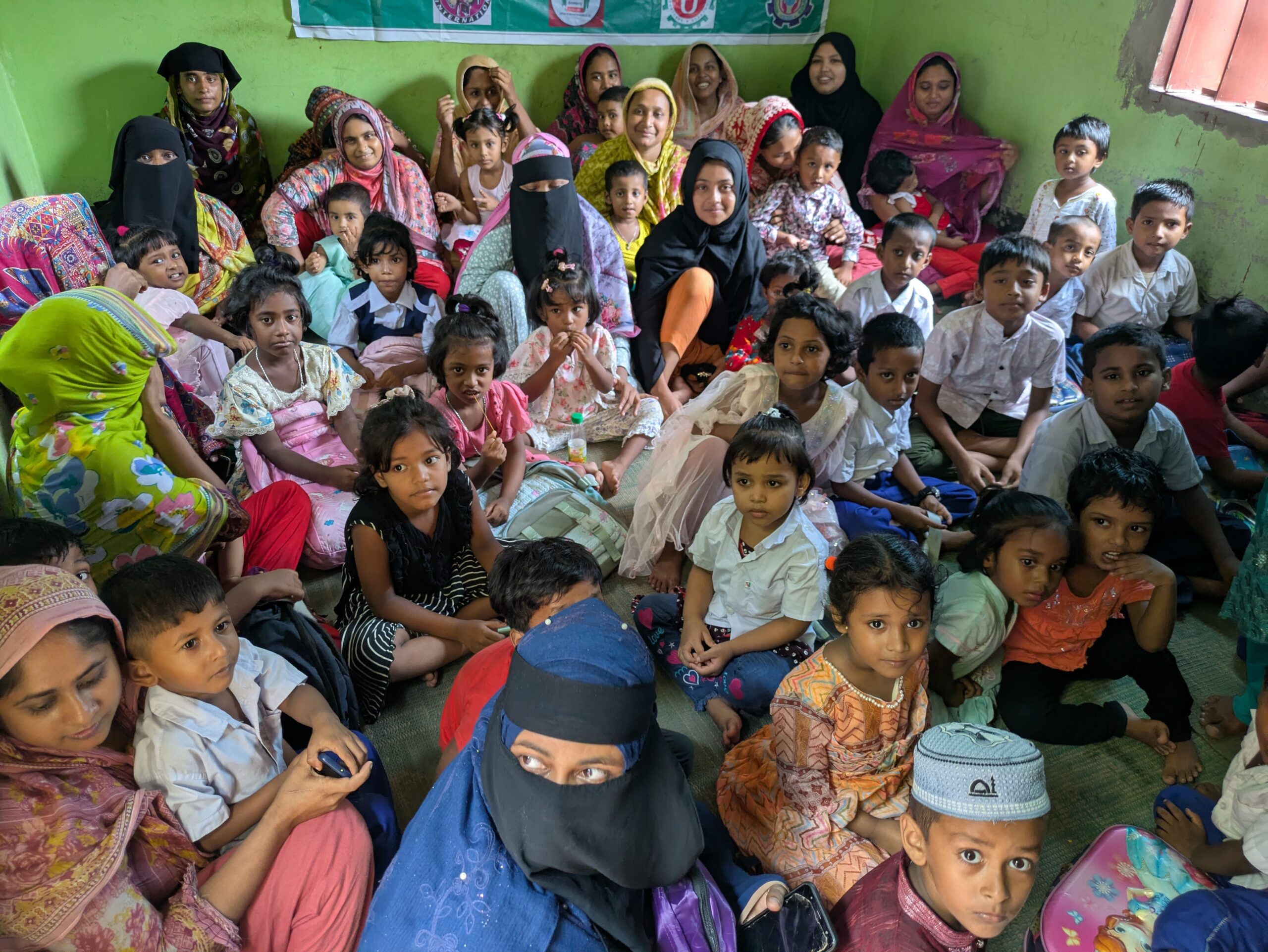
TWA then looked to other needs: children needed education, but schools were so far away, so they started a kindergarten in December 2024. It serves 50 children, who are given books and uniforms. Kamal’s wife and daughters volunteer as teachers.
“The school is a huge success for us,” said Farida. “You can see the smiles on the mother’s and kid’s faces.”
And in December 2024, a medical clinic began operating one day a week, staffed by a husband-and-wife team of doctors.
The “village,” as it might be called, is run internally by a local management committee of 8 to10 members who deal with issues such as encroachment on public roadways. Externally, LIE and district union leaders take a role in management.
“Many, many people have become self-reliant,” said Kamal, 67, who no longer works as a hawker.
Their focus now remains on changing laws. LIE is working with the government on a draft resolution. Meanwhile, in the “village”, Kamal now has his sight set on acquiring fresh water and establishing a small local market where residents can buy food and commodities.
“It’s clear that this project is a bargaining chip with the government,” said Nash at SNI. “If we can do this, what is the government’s excuse?”
About the author of this story: Barbara Sibbald is a Canadian journalist whose work includes articles on HIV/AIDS in Swaziland and Manipur, India, and drug resistant TB in Mumbai, India.