Subscribe to our E-Letter!
Subscribe to our e-mail and stay up-to-date with news and resources from street vendors around the world.

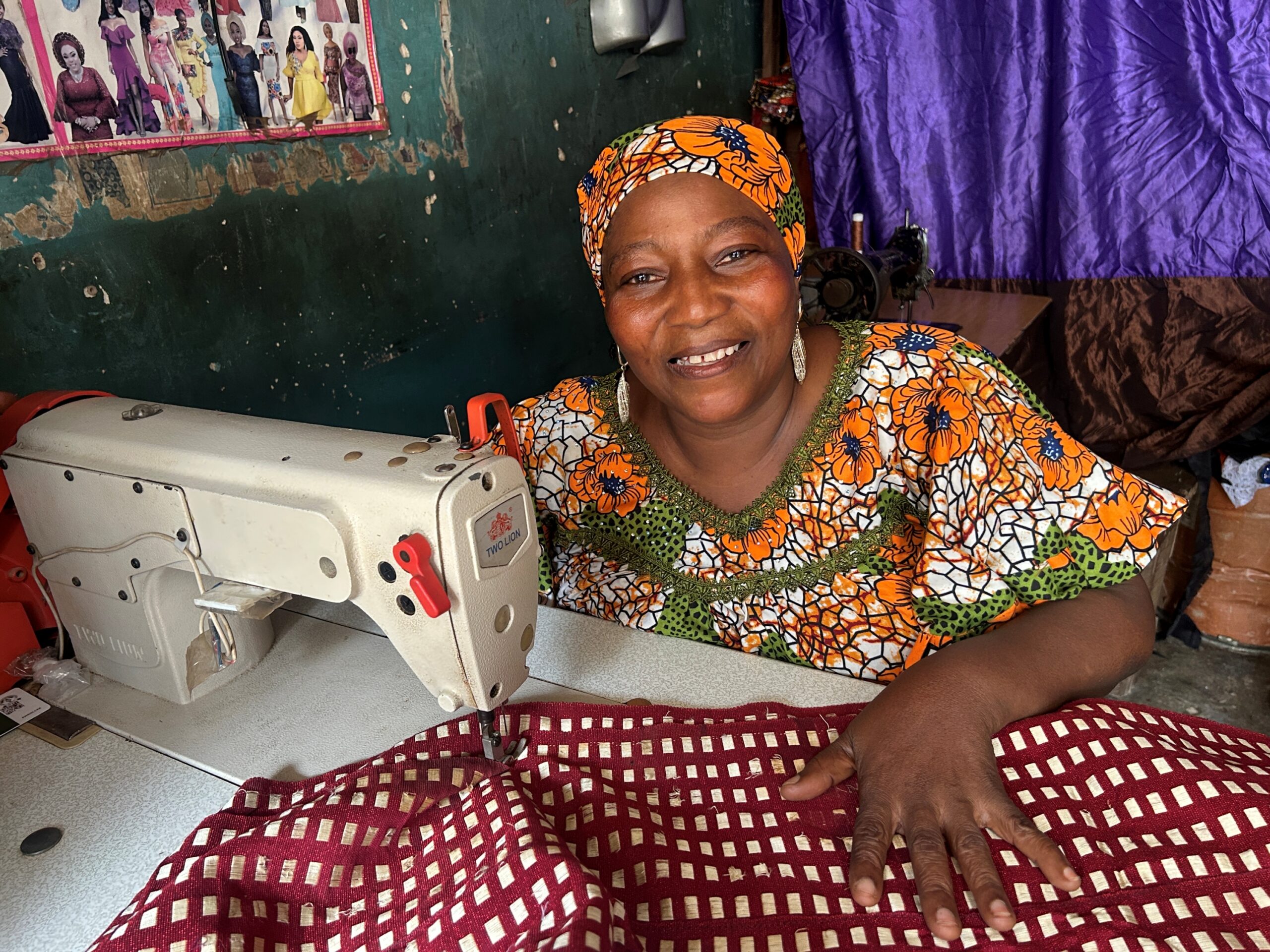
[Caption: Mrs. Faith Lawal, a fashion designer in a market in Lagos, both receives and gives support to the Federation of Informal Workers’ Organisations of Nigeria (FIWON).]
Unable to drive any further in this busy, byzantine informal market in Lagos, Nigeria, Simeon Ogunwole pulls over and says, “We will have to walk from here.”
The narrow road ahead has collapsed into a sinkhole, so we skirt around the hole on foot and step carefully to avoid puddles, potholes and broken concrete. On both sides of the road, trenches filled with sewage look fetid and oily. A young boy urinates into the sludge. Behind him, a chicken pecks at a torn-open plastic bag of garbage. Still, the stalls and storefronts are clean and orderly, the vendors serving customers or waiting patiently in the shade.
Simeon has worked as an informal driver for eight years to help support his wife, a teacher, and two young children. He has many clients, but he regularly offers transportation services to the Federation of Informal Workers’ Organisations of Nigeria (FIWON). Simeon is a passionate member of FIWON, a cooperative and advocacy group, and he’s taking me to meet another passionate member.
When we arrive at the business of Mrs. Faith Lawal, a fashion design, she leaps up to welcome us and soon leads us in the solidarity chant with which FIWON cluster meetings are opened. At those weekly meetings, local issues and solutions are discussed.
Then she pulls down a 2023 FIWON wall calendar. It depicts some of the highlights of that year. There is a photo of a training program, and another of a protest march—one of many that FIWON members have held to protest poverty and bad governance, and to demand fair treatment as workers who pay taxes but receive no services. Simeon says the protests get the attention of authorities, who make promises—“but they do not keep their word.”
Most recently, FIWON members in Lagos took to the streets to protest the demolition of houses, including those of members. Now FIWON’s lawyer is working on getting redress for the families who lost everything.
“FIWON is a force to reckon with in Nigeria,” Mrs. Lawal asserts, and it’s clear the same could be said of her. More than 24 artisans in her market have joined FIWON at her urging, and for six years, she has served as the Chief Whip for FIWON’s Lagos Chapter. It is her role to ensure meetings start on time, maintain order and run as they should.
But running a disciplined meeting is easier than running her business in a world where so much is out of her control. A widow with four children between the ages of 10 and 22, all in school, she has been creating clothing for women and men, young and old, for decades. But fashion trends continuously change, requiring new equipment to bring in business.
“If you don’t have the modern equipment, customers think you can’t do the job,” she says. An old fashioned sewing machine, glossy black, has been relegated to the back part of her stall, while a new, sleek industrial machine sits front and centre. That newer machine is from FIWON, bought with a low-interest loan. Today, however, all the latest fashions in Nigeria feature shiny studs, and those must be applied with a special presser—which she doesn’t own. Such a small thing, but as she explains, “If you don’t have it, you can’t compete.”
So business falls, while everything else goes up. Her rent rises incrementally, she notes, a problem for many workers in Nigeria.
Simeon shares that last year, his rent doubled. He had to take a low-interest loan from FIWON to pay it. The problem, he says, is a lack of enforcement of rent-control regulations, and a policy that makes new tenants desirable over existing tenants.
Mrs. Lawal must also pay for garbage collection and electricity. She points to the small solar lamp hooked to the storefront’s door—a lamp she purchased from FIWON. It is especially important here where the electricity can be cut for days, even weeks, at a time regardless of whether you have paid the bill.
Tax collectors—local, state and national—are another issue. They arrive regularly, demanding payment based on what, she doesn’t know. “They don’t care what you have earned,” she says. They simply demand an amount, and she is forced to pay.
As she walks along with us back to the vehicle, she points to the uncollected garbage, the lack of water and sanitation. “What are we getting for those taxes? Nothing.”
And that is exactly the point of the meetings, the protests, and this whole global movement.
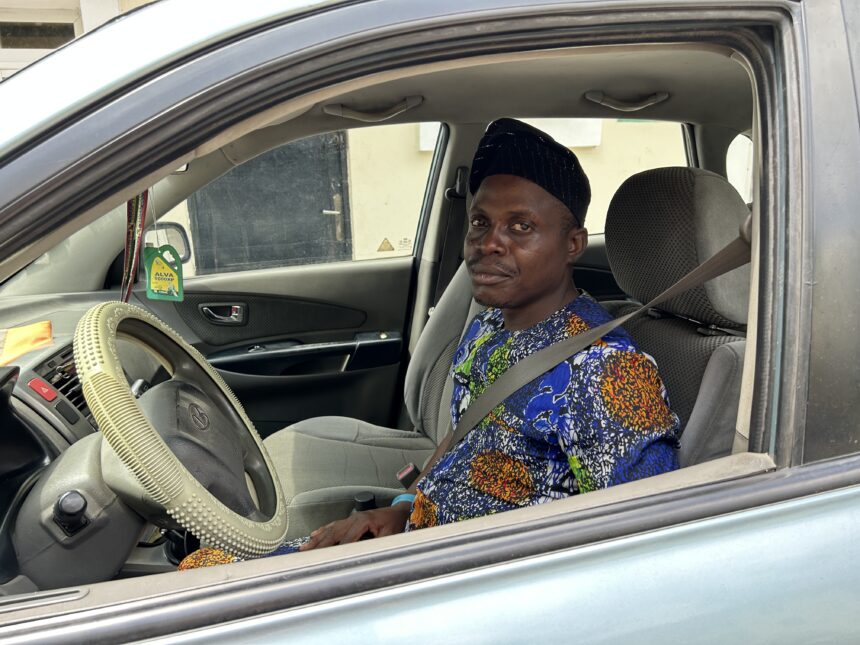
[Caption: Simeon Ogunwole]