Subscribe to our E-Letter!
Subscribe to our e-mail and stay up-to-date with news and resources from street vendors around the world.
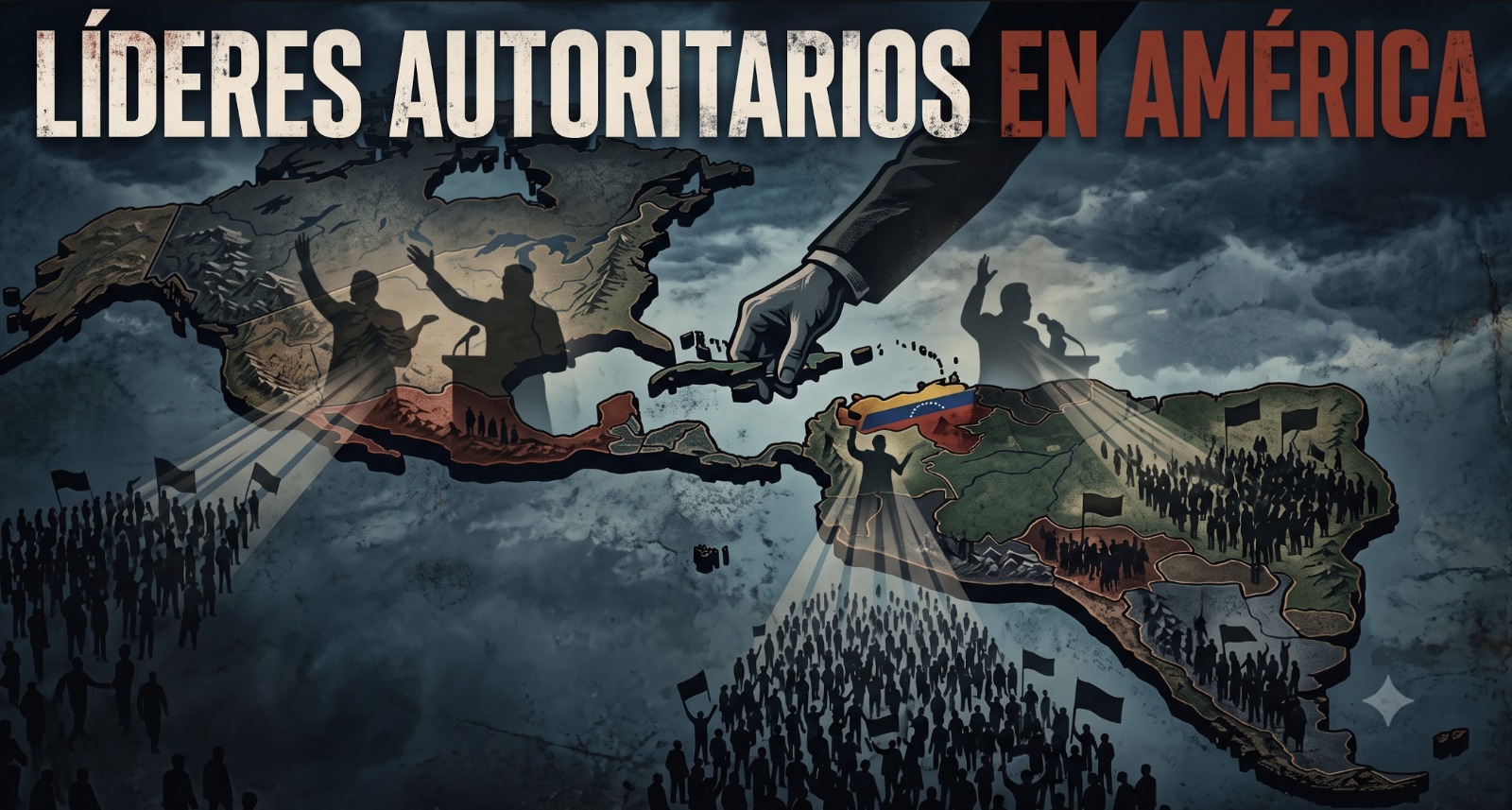
So far in 2026, Latin America finds itself at an unprecedented institutional crossroads. What began in several countries as a promise of “economic freedom” or an “end to corruption” has turned into a regional pattern of power concentration with a common, deliberate target: public space. For the millions of informal economy workers that StreetNet International represents globally, these “strong” governments have brought not order or progress, but greater labor vulnerability, persecution, and political exclusion. The real axis of tension today divides institutional democracies from autocratic regimes that undermine the rule of law, showing that when democracy weakens, the first to feel the blow is the most unprotected link in the chain: the worker who has no office to shelter in, only their merchandise, their family, their organization, and their voice.
From StreetNet’s perspective, public space is not simply commercial ground; it is a territory of legitimate rights, survival, and dignity. Yet the map of this current democratic decline is diverse, complex, and hostile to our working class.
In Argentina, Javier Milei’s libertarian model arrives this month battered by scandals and an economy that hasn’t taken off, with disapproval already exceeding 64%. The economic “shock” has emptied the pockets of our vendors’ regular customers, while presidential decrees attempt to dismantle decades of labor rights won through hard struggle in the street, blocking democratic channels for protest and criminalizing organized subsistence.
In Honduras, the recent shift from left to right with Nasry Asfura’s presidency has marked the return of “urban reordering” policies that are often synonymous with forced evictions, institutional violence, and a total absence of socioeconomic alternatives for those who live day to day.
Meanwhile, in neighboring Nicaragua, Daniel Ortega’s regime celebrates two decades of total, totalitarian control. There, persecution of social leadership is absolute: the simple act of joining, coordinating with international networks, or organizing to demand better conditions in a market is branded as an act of treason against the homeland, effectively extinguishing any trace of union freedom and violating international ILO conventions.
El Salvador’s case remains the dangerous mirror in which many other leaders in the region want to see themselves. With 50 months of a normalized state of exception, Nayib Bukele has achieved a security that is widely applauded, but at a human cost that our affiliated organizations know and suffer directly: the suppression of constitutional guarantees, the total loss of due process, and the latent fear that any police officer might arbitrarily decide who has the right to occupy the sidewalk to earn a living and who ends up behind bars for the simple act of working in the street.
Meanwhile, the Central American region is also witnessing authoritarian mutations where a classic military coup isn’t needed to exercise dictatorial control; hijacking the justice system is enough to shackle popular will and unravel the social fabric. This is the case of Guatemala, which perfectly exemplifies the phenomenon of “institutional capture” or judicial dictatorship. In the middle of 2026, despite having a democratically-oriented central government, the Public Prosecutor’s Office and contested courts maintain systematic persecution and selective criminalization that suffocates social movements and human rights defenders, drastically limiting their capacity to mobilize and make proposals in public space.
Finally, in Venezuela, the longest-standing example of institutional suffocation in the south, the transition led by acting president Delcy Rodríguez following the turbulent events of January 2026 keeps the informal economy in absolute limbo. Caught between the hope of real economic opening and the iron grip of state structures that still persist, Venezuela’s informal economy workers remain the anonymous heroes of an economy that can barely breathe, resisting without the legal recognition or social protection networks that we have so long demanded from our global alliance.
This troubling mosaic shows that the list of nations at risk is far from complete, extending even toward the powers of the north, where extreme polarization and radical nationalist rhetoric constantly flirt with the weakening of traditional democratic checks and balances.
Faced with this scenario, StreetNet International’s slogan resonates with more urgency than ever: “Nothing for us without us.” In the face of the autocratic wave seeking to empty the streets of workers and fill them with repression, organization, international solidarity, and the defense of the social and solidarity economy are not just labor tools; they are the last bastion of dignity and democracy in a region under siege.
This article was written by Regional Communicator for the Americas, Daniel Peralta.
By entering your personal data and clicking “Suscribe,” you agree that this form will be processed in accordance with our privacy policy. If you checked one of the boxes above, you also agree to receive updates from the StreetNet International about our work