Subscribe to our E-Letter!
Subscribe to our e-mail and stay up-to-date with news and resources from street vendors around the world.

Street and market vendors are usually at the forefront of conflict zones, both essential lifelines for the supply of goods and the most vulnerable targets. Open-air markets have historically been targets for bombing – they are infrastructures of civilian life, meeting points, fundamental hotspots for the life of a city. Destroying a market, killing or terrifying vendors, means going for the very soul of urban life.
We asked Natalya Levytska, deputy chairperson of KVPU – Confederation of Free Trade Unions of Ukraine to tell us about the life, dangers and courage of market vendors during the war in Ukraine. We are deeply thankful to her for taking the time to answer our questions.
During the first weeks following Russia’s full-scale invasion on 24 February 2022, many supermarkets and distribution centres were forced to close because of active hostilities, destruction of infrastructure, or the inability to deliver goods. By the end of March 2022, approximately 21% of grocery stores were not operating, although major retail chains gradually resumed their activities in the following months.
During this critical period, market vendors and small food entrepreneurs acted as a flexible buffer within Ukraine’s food supply system. Unlike large retail chains that relied on centralised logistics and distribution centres, small traders were able to adapt rapidly by using informal wholesale networks and personal business relationships. Many sourced products directly from farmers, local food processors, small warehouses, or trusted contacts in other regions, allowing them to bypass disrupted supply channels.
Shorter supply chains also contributed significantly to maintaining food availability. Small businesses often purchased fruit, vegetables, dairy products, meat, bread, and other essential goods directly from local producers. When major logistics hubs became inaccessible because of military operations, these local supply routes often remained operational.
Small entrepreneurs were also able to adjust their product range quickly, selling whatever goods were physically available rather than maintaining the standardised assortment required by large supermarket chains. Many relied on their own vehicles or informal transport networks to collect and distribute products, enabling them to overcome logistical bottlenecks more effectively than larger retailers.
In some communities, market vendors coordinated their activities with local authorities, volunteer organisations, and humanitarian agencies, particularly when delivering food to liberated areas or cities that had experienced siege or severe disruption. Their flexibility and local knowledge played an important role in maintaining food supplies during the most difficult stages of the conflict.
The Free Trade Union of Entrepreneurs of Ukraine started its humanitarian aid activities with the support of colleagues across the world. The union handed food kits and helped with evacuation for people who fled from the frontline regions.
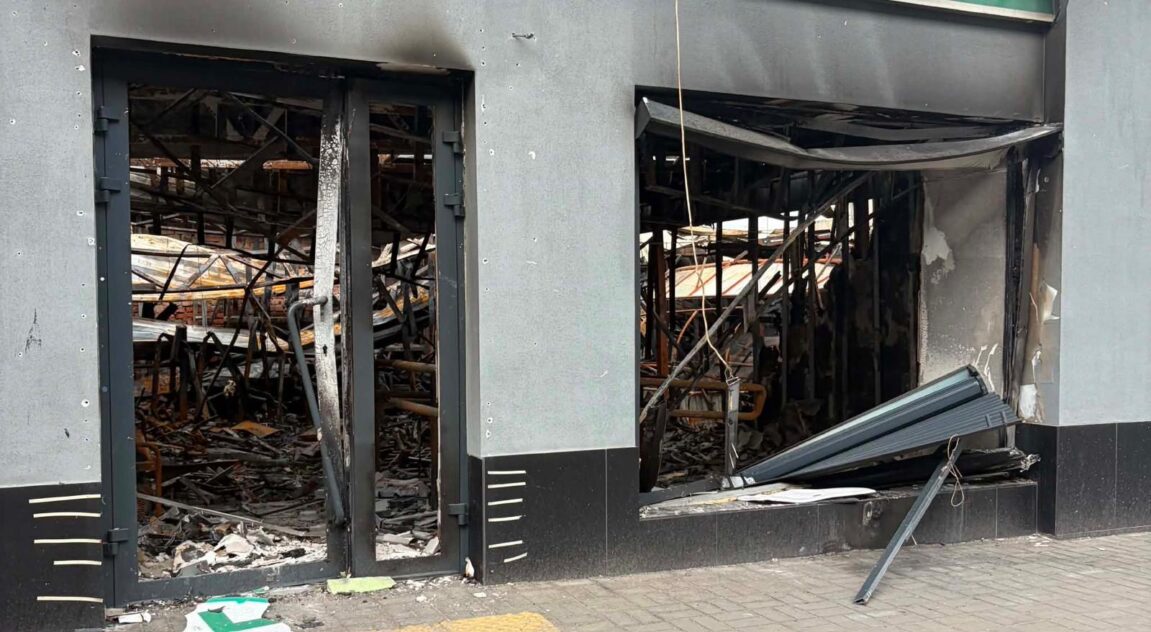
Workplaces of vendors and entrepreneurs became targets for Russian forces. Barabashovo Market in Kharkiv was one of the largest markets in Eastern Europe. In 2022 due to targeted enemy shelling and fires, most of the trading pavilions of this open market complex were completely destroyed. The members of the Free Trade Union of Entrepreneurs of Ukraine lost their workplaces there.
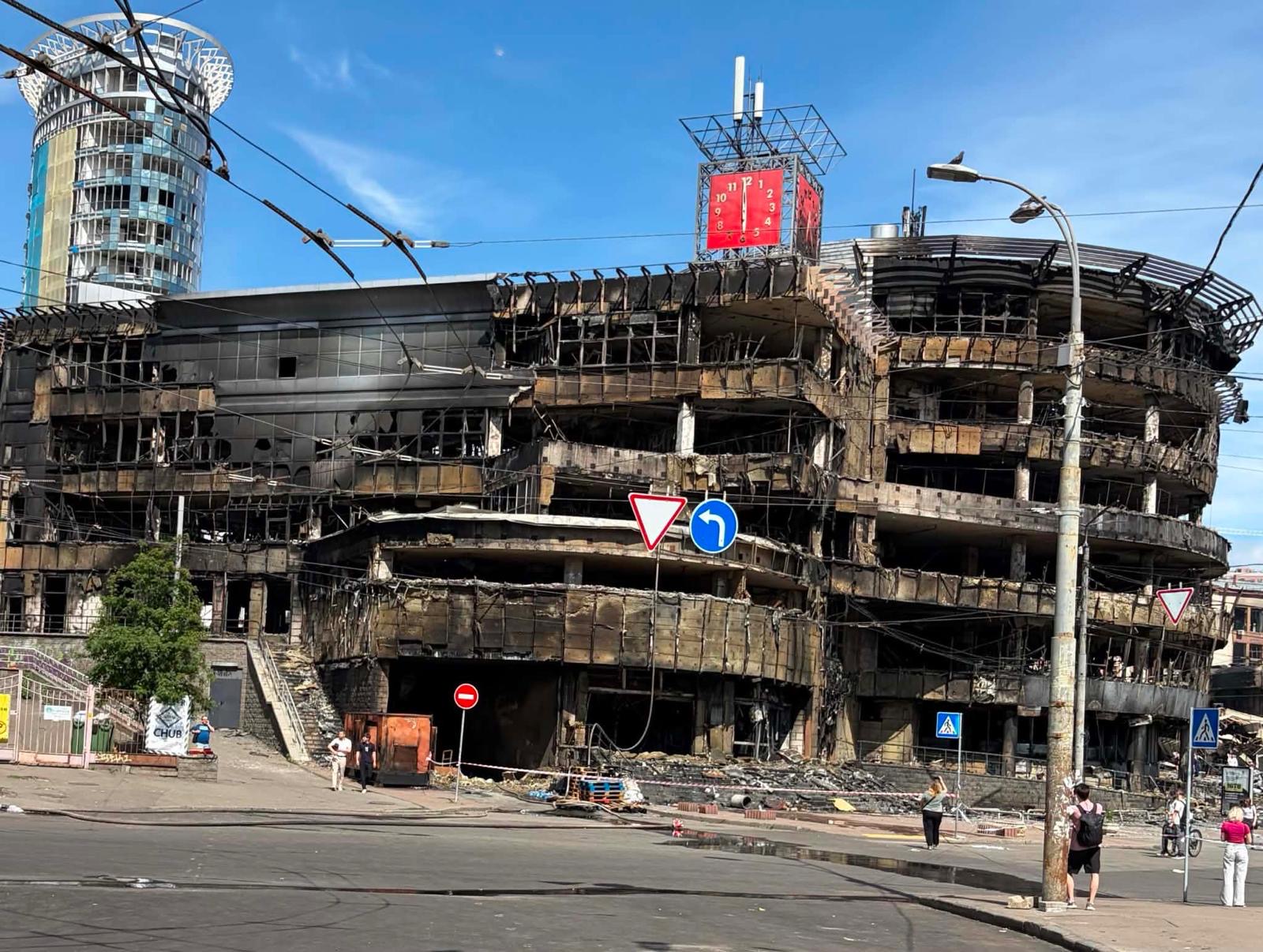
In June 2026, a massive Russian attack and the resulting fire destroyed most of the trading rows of the Pochaina Book Market in Kyiv. On May 25, 2026, Lukyanivskyi Market (Kyiv) – the trading floor and the adjacent Kvadrat shopping center were critically damaged by a missile strike. Despite the destruction, entrepreneurs continue to trade near the destroyed open-air market.
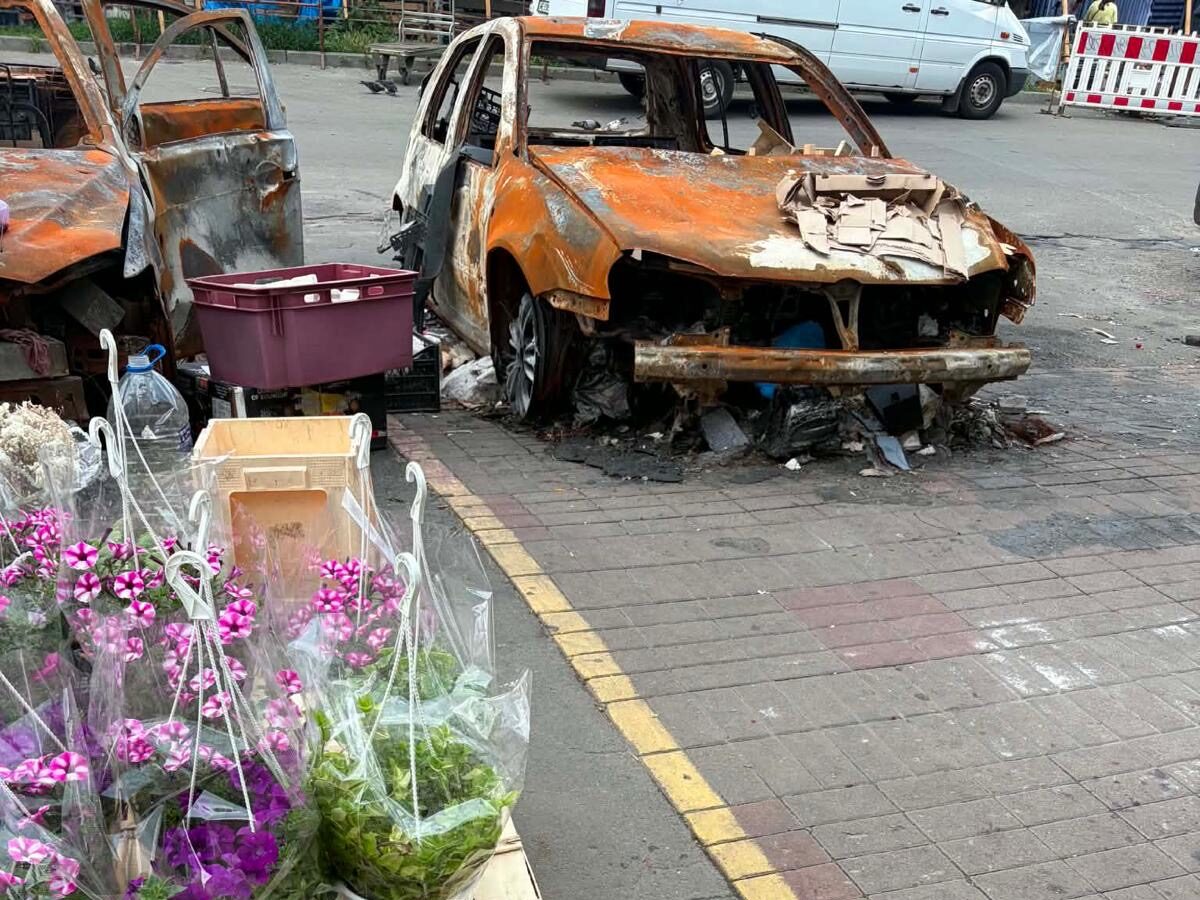
Unlike employees working in supermarkets or enclosed retail facilities, many market vendors conduct their business in open-air markets, temporary stalls, street markets, or uncovered trading areas. This exposed them to a number of occupational safety risks that were directly related to the armed conflict.
One of the most significant challenges was the lack of protective infrastructure. Most open-air markets did not have bomb shelters or other protective facilities. During air raid alerts, vendors often had to abandon their goods and evacuate over considerable distances. In practice, however, many continued trading despite the danger because closing their stalls meant losing their only source of income.
Open trading spaces also provided virtually no protection from missile fragments, artillery shelling, blast waves, or secondary debris such as shattered glass and metal fragments. As a result, vendors faced substantially greater physical risks than workers in more protected indoor environments.
Transporting goods became another hazardous aspect of their work. Regular procurement trips frequently involved travelling through military checkpoints, using roads exposed to shelling, crossing areas contaminated by mines, or navigating regions where transport infrastructure had been heavily damaged.
Many vendors are self-employed or operate as individual entrepreneurs rather than employees of large companies. Consequently, they often lacked access to formal occupational safety programmes, specialised safety training, personal protective equipment, insurance coverage, or other forms of institutional support typically available in larger enterprises.
In addition to these physical hazards, vendors experienced considerable psychological strain. Constant air raid alarms, uncertainty about future income, the ongoing threat of renewed attacks, and the need to support both their families and their businesses created prolonged levels of stress and anxiety throughout the conflict.
Compared with large enterprises, Ukraine’s market trading sector has traditionally had relatively low levels of trade union representation. As a result, much of the practical coordination during the conflict was undertaken by business associations, market administrations, local chambers of commerce, municipal authorities, and volunteer networks.
These organisations played an important role in restoring market operations after attacks, coordinating the repair of electricity and water supplies, addressing logistical challenges, sharing information about available suppliers, and working with military administrations on operating procedures and security measures. In many cities, market administrations also organised the clearing of damaged market areas, the temporary relocation of trading spaces, the installation of backup power systems, and the provision of generators during the energy crisis of 2022–2023.
Trade unions focused primarily on protecting the labour rights of workers employed in the retail sector, providing humanitarian assistance to their members, supporting internally displaced workers, and mobilising international solidarity and humanitarian aid. While they played a less direct role in organising market trading itself, trade unions contributed to maintaining the resilience of workers and communities affected by the war.
The experience of 2022 demonstrated that the resilience of urban food supply depended on the interaction between formal and informal systems. Large retail chains provided scale and centralised logistics, while market vendors and small entrepreneurs compensated for local disruptions through their flexibility, close relationships with suppliers, and short supply chains. Their contribution was particularly important during the first weeks of the invasion and in regions where centralised retail distribution temporarily ceased to function. At the same time, these entrepreneurs carried out their work under exceptionally hazardous conditions because of the open nature of their workplaces, the absence of protective infrastructure, and the lower level of organisational protection available to self-employed workers compared with employees of large retail companies.
The pictures in this article have been taken by StreetNet members in Ukraine