Subscribe to our E-Letter!
Subscribe to our e-mail and stay up-to-date with news and resources from street vendors around the world.
Imagine starting a working day knowing that one heavy storm, a market eviction, a fire or a health emergency could wipe out your income with no pension, guaranteed sick leave or reliable social protection.
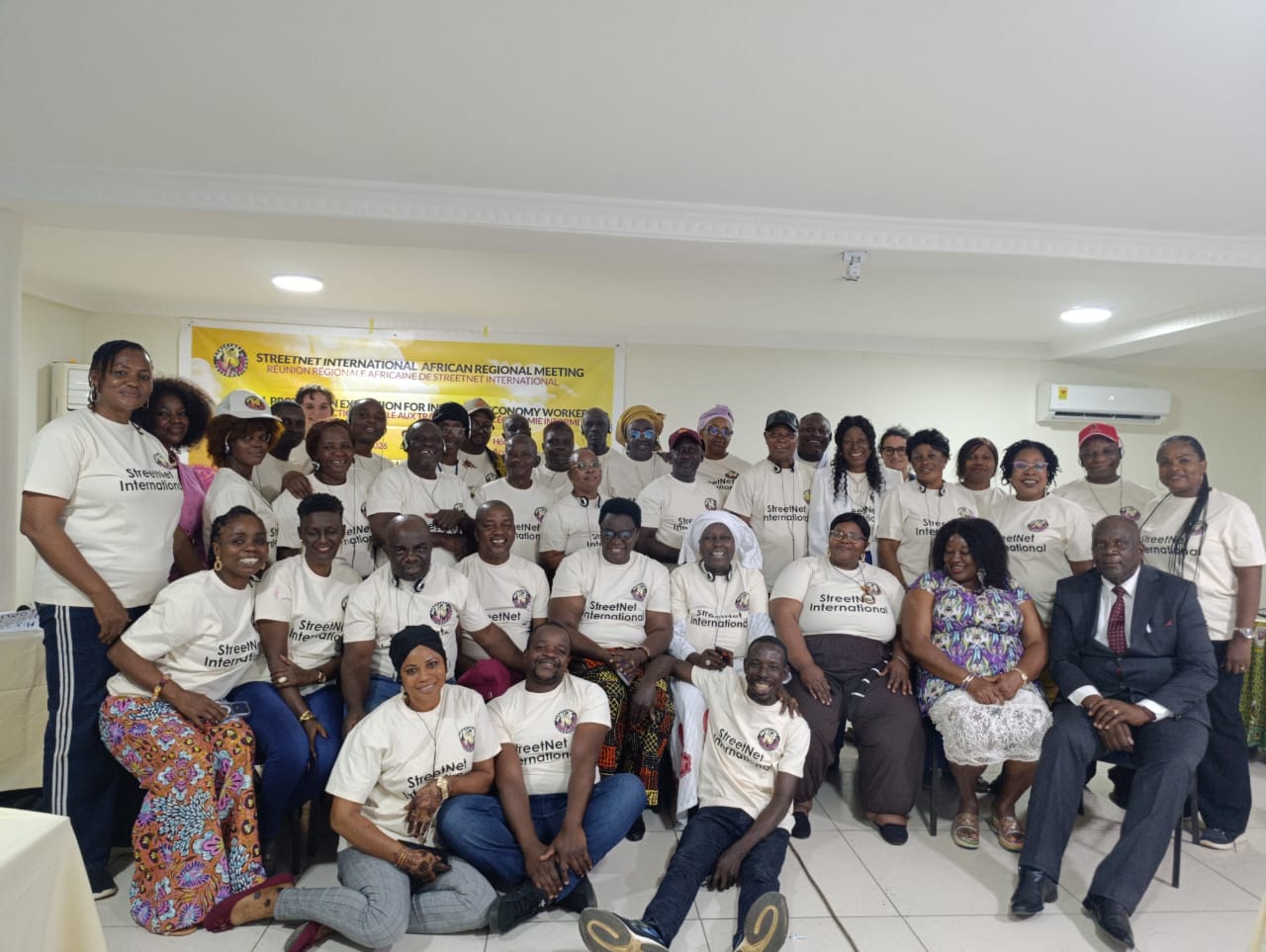
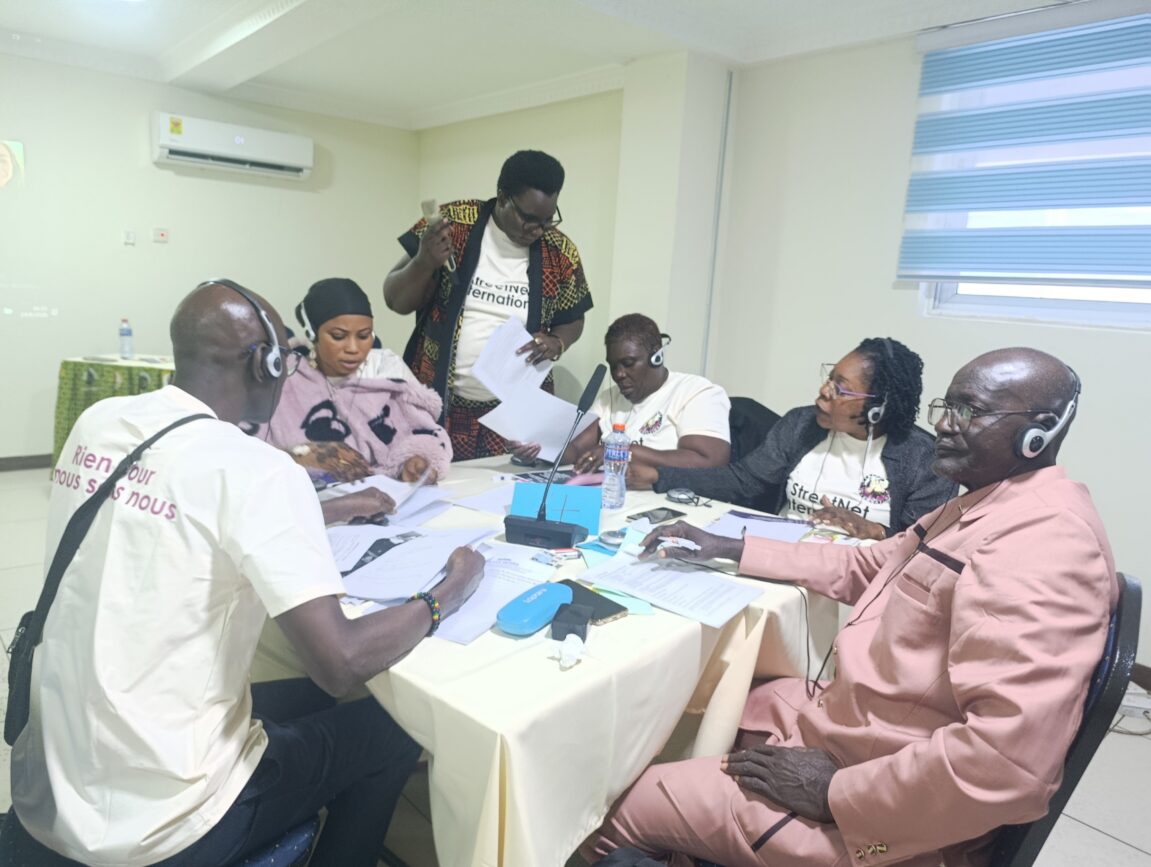
This reality is at the heart of the StreetNet International African Regional Meeting in Accra, Ghana, where 35 representatives of street vendors, market traders, hawkers and informal economy workers’ organizations across 24 countries from Southern,Eastern, Western and Central African Regions met to strengthen social protection and develop coordinated advocacy strategies. Hosted by the Union of Informal Workers Associations (UNIWA), the meeting took place between 24-26 August, 2026, and was supported by the Robert Bosch Stiftung Foundation as part of StreetNet International’s project on the extension of social protection.Opening the meeting, StreetNet International President Lorraine Ndlovu called for unity and collective action, saying, “We are stronger together. Our collective voice can move mountains and change policies that have long excluded us.” UNIWA General Secretary Enoch Bio welcomed delegates and highlighted the importance of strengthening connections among informal workers’ organizations across Africa.
Laura Alfers, International Coordinator of WIEGO, emphasized that social protection should not be a privilege reserved for workers in the formal economy but a fundamental right for everyone. Participants discussed the persistent exclusion from healthcare, pensions, income security, unemployment protection and childcare, despite informal economy workers’ major contributions to local and national economies.
Representing the Trades Union Congress, Rose Kwei, Acting Head of the Organizing Department, stressed the importance of including informal workers within the broader labour movement. “UNIWA’s affiliation with the Trade Union Congress demonstrates our commitment to including all workers, regardless of their employment status,” she said.
Evelyn Benjamin Sampson, reviewing StreetNet’s strategic goals, urged participants to turn demands into public policy. “Social protection must be translated from a concept into concrete public policy,” she said, adding that informal economy workers should be recognized as part of, rather than outside, the economic system.
Participants called for universal legal protection, ratification and implementation of relevant international and regional frameworks, and realistic implementation plans developed with the direct participation of workers’ organizations.
Climate change emerged as another major concern, with participants describing floods, fires and changing rainfall patterns that destroy crops, goods and income. Comrade Mwanda Chiwambala of MUFIS, Malawi, described the situation powerfully: “Climate change is a bad animal. It destroys without discrimination, and we are the ones bearing the brunt, with no safety nets to catch us when we fall.”
Lameck Kashiwa of AZIEA, Zambia and member of StreetNet’s International Council shared how StreetNet’s affiliates use evidence, social dialogue and multi-stakeholder engagement to advocate for informal economy workers. AZIEA’s achievements included their participation in Zambia’s technical working groups and recognition as opinion makers. Kashiwa stressed that advocacy requires patience: “There is a need for tolerance and patience when working with decision-makers to achieve your goals.”
From Rwanda, Jeannette Nyiramassengesho, StreetNet’s treasurer, shared SYTRIECI’s work on childcare. Parents organized an Early Childhood Development space at a market using savings-group resources, while radio and television helped spread advocacy messages. “We use different platforms like radio and television to share our message, which can reach everyone,” she said.
Gbenga Komolafe of FIWON – another elected member of StreetNet’s International Council, in Nigeria highlighted low social protection coverage in the country and the importance of training young people in media advocacy.
Participants identified five regional priorities:
Beyond agreeing on these five priority demands, participants reached a major milestone by formulating a joint continental advocacy plan and translating the shared priorities into tangible outcomes. They mapped out targeted strategies, key actors,and concrete action required to mobilize momentum and drive regional change.
Youth participation was also emphasized as essential to sustaining the movement. The African Youth project created monthly online meetings, an in-person training in Benin and a youth manifesto for Africa Mathokoza Sikhondze of Eswatini called for young people to be included in decision-making, while Angelique Kipulu from the DRC urged leaders, “Let us mentor them to become our successors.”
As preparations continue for the 8th StreetNet International Congress, delegates are also discussing constitutional amendments, governance and stronger youth representation. The Accra meeting is more than an exchange of experiences:it is a collective effort to move informal economy workers’ demands from the streets into policy, ensuring that those who keep Africa’s economies moving are not left without protection when crisis comes.
This article was written by Nancy Likiripa, project management and impact trainee.
The feature image is A group photo of StreetNet International affiliates from the African, Eastern, Southern, Western and Central regions during the regional meeting in Accra, Ghana (credits: Nancy Likiripa).