Subscribe to our E-Letter!
Subscribe to our e-mail and stay up-to-date with news and resources from street vendors around the world.
In many African countries, including Malawi, Zimbabwe, and Zambia, election seasons bring severe violence and economic ruin to ordinary citizens. Political rivalries weaponize urban youth, forcing businesses to close and disrupting daily livelihoods in markets and homes. For marginalized communities who suffer injuries and deaths, elections become a struggle not over who wins, but who survives.
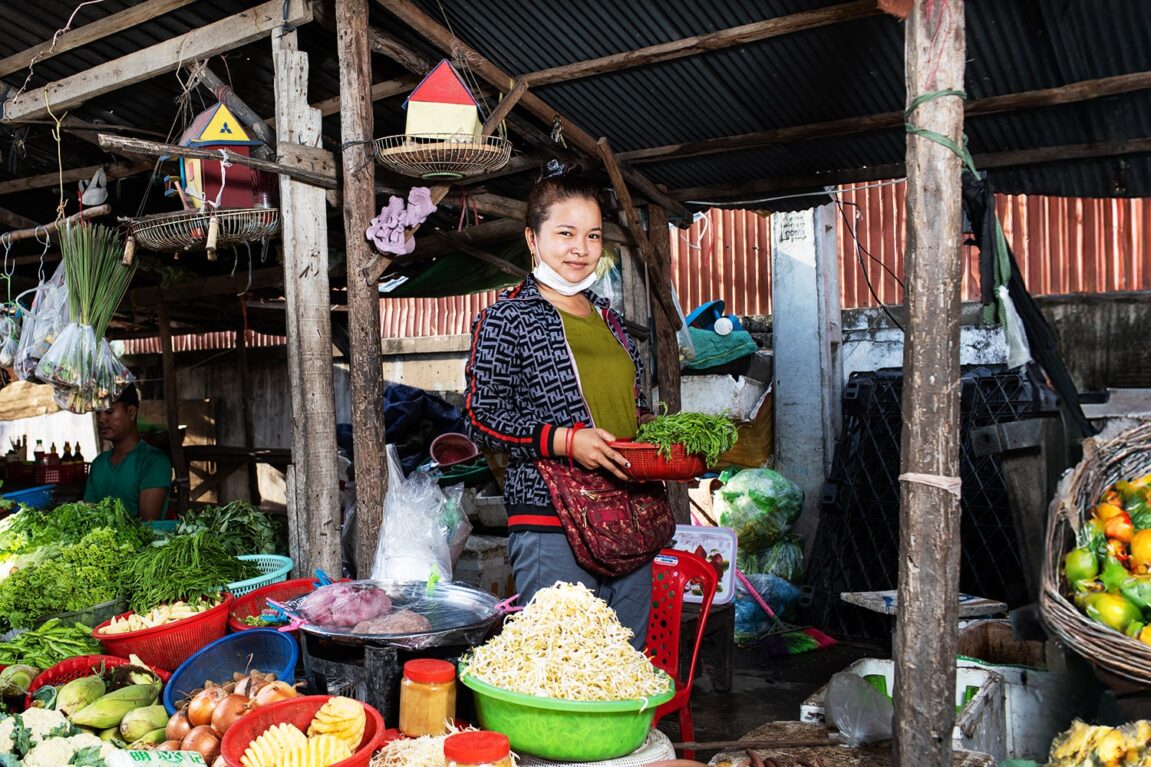
As Malawi’s 2025 general elections approached, political tensions created severe peril and economic ruin for marginalized groups, small-scale traders, and informal settlement residents in major cities like Blantyre and Lilongwe. Political rallies frequently turned violent, leading to the destruction of market stalls, loss of stock, and financial devastation for vendors who rely on daily income to feed their families. One vendor, Alinafe Madalo* from Lilongwe said “I was disappointed to come in the morning and find out that my stall was torched and that certain political party followers were just overjoyed and this led them to misbehaving and mistreating those whom they feel have differences in political parties following.”
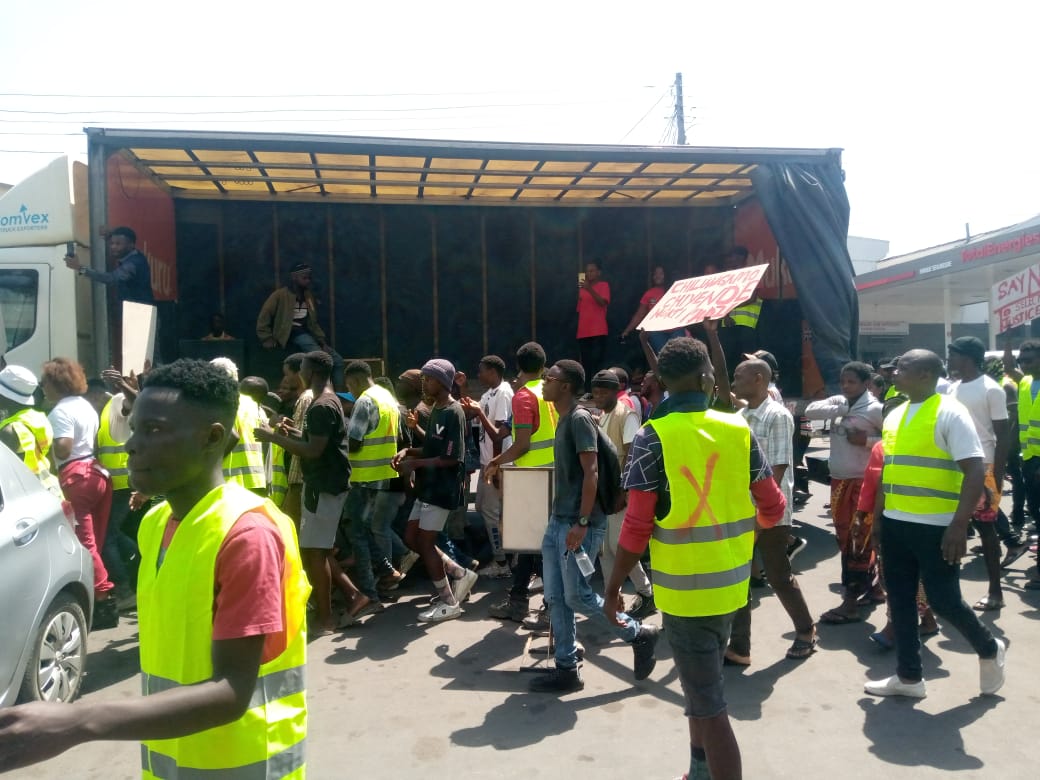
The climate of fear escalated on June 26, 2025, in Lilongwe, when masked men armed with knives, sjamboks, and sticks attacked peaceful protesters demanding an independent voter roll audit. Despite being present, police failed to intervene or arrest the attackers, who were allegedly linked to a ruling party youth militia. Human Rights Watch noted this incident highlighted how political violence functions as a calculated tool of intimidation rather than spontaneous conflict.
In Blantyre also, vendor Mphatso Chingaipe* from Mbayani Township but operates her business in Blantyre CBD said that “when the time of elections approaches, I prefer doing my business at home even if it means dropping my profit margin. Because going to the place where I always do my business, you may lose all your goods in a blink of an eye”.
Ultimately, ordinary citizens remain caught between ruthless political interests and institutional failures, forcing many to compromise their safety, livelihoods, and political expression.
Zambia’s political landscape is increasingly haunted by “cadreism,” where party-affiliated youths are mobilized by politicians to enforce dominance through violence, intimidation, and extortion in public markets and bus stations. Driven by high unemployment and poverty, these weaponized youths disrupt everyday economic life, target vulnerable groups, and fuel gender-based violence.
This violence routinely spills over onto ordinary citizens who are not involved in politics. Highlighting the severity during the 2026 election period, Max Sheme Chulu, Communications Officer for the Association of Vendors and Marketeers in Zambia (AVEMA) and member of the StreetNet Media Network, observed: “This usually happens here in Zambia, but this year it was worse. Cadres are all over the country, they are even killing people mercilessly.”
Max experienced this firsthand in July 2026 when he was severely assaulted and robbed together with his two friends despite minding his own business and engaging in no political activity. During the attack, he lost two smartphones, a wrist watch and money amounting to ZMW16,000 (approximately USD 817). After the attackers left, they were taken to the hospital by people from the community while they were unconscious. At this point, again his wife was also forced to look for approximately ZMW 8000 (USD 408) for medical bills and surgeries for the spinal injury which even resulted in failure to lift heavy goods, internal abdominal injury and on his shoulder.
His ordeal underscores the most alarming aspect of cadreism: non-partisan, ordinary people frequently suffer the ultimate price alongside political leaders, journalists, and activists. Ultimately, cadreism entangles political patronage with daily commerce, creating a climate of fear where anyone can become a target.
Campaign and election periods in Zimbabwe have a long history of institutionalized political violence, intimidation, and vandalism. Human rights organizations detail how political factions exploit widespread poverty to recruit desperate urban youths into militias and proxy groups aimed at silencing opposition strongholds.
In Bindura, in June 2026, a girl (*Grace) was speaking against abolishment of the Zimbabwe Gender Commission which focuses on women and gender equality during a rally. Immediately after she spoke, the counsellor and a Member of Parliament’s son confronted her and threatened her that she’ll not live peacefully in the territory she is betraying the ruling party.
A recent study published in MDPI highlights how severe poverty, drug abuse, and unemployment leave ghetto youths susceptible to financial exploitation by political actors. As one youth leader noted, desperate, impoverished young people will engage in anything, including violence, if paid. Another local business owner described how this environment leaves most youths turning to crime.
As documented in reports by Human Rights Watch, these state-tolerated youth militias frequently target informal economy workers, vendors, and bystanders while police fail to intervene. While intended to coerce political opponents, the ongoing violence ultimately disrupts the daily livelihoods and security of ordinary citizens who rely on the informal economy to survive.
Across Malawi, Zambia, and Zimbabwe, political violence disproportionately impacts ordinary citizens who have no involvement in political contests. Informal traders, shopkeepers, and workers face severe economic devastation from destroyed stalls to lost daily income that they cannot absorb. Beyond the immediate physical, damage and financial loss, this violence instills long-lasting fear, forcing citizens to self-censor, avoid public spaces, and carry a deep psychological burden long after elections end.
Elections in Malawi, Zambia, and Zimbabwe reveal that political competition frequently invades cstreets, markets, and homes, turning voting seasons into periods of intense insecurity. True democracy extends beyond casting ballots; it requires that citizens can work, travel, protest, and express political views without risking their safety or livelihoods.
The true test of an election is not merely who wins the vote, but whether ordinary citizens survive the process with their rights intact. Democracy fails when people must choose between exercising their political voice and protecting their lives, families, and economic survival.
By entering your personal data and clicking “Suscribe,” you agree that this form will be processed in accordance with our privacy policy. If you checked one of the boxes above, you also agree to receive updates from the StreetNet International about our work